EURECA-PRO

EURECA-PRO
Transversal Skills Week

Online event | Monday November 30, 2026 to Friday December 4, 2026
University involved: Hasselt University
30 Nov, 2026
Registration open

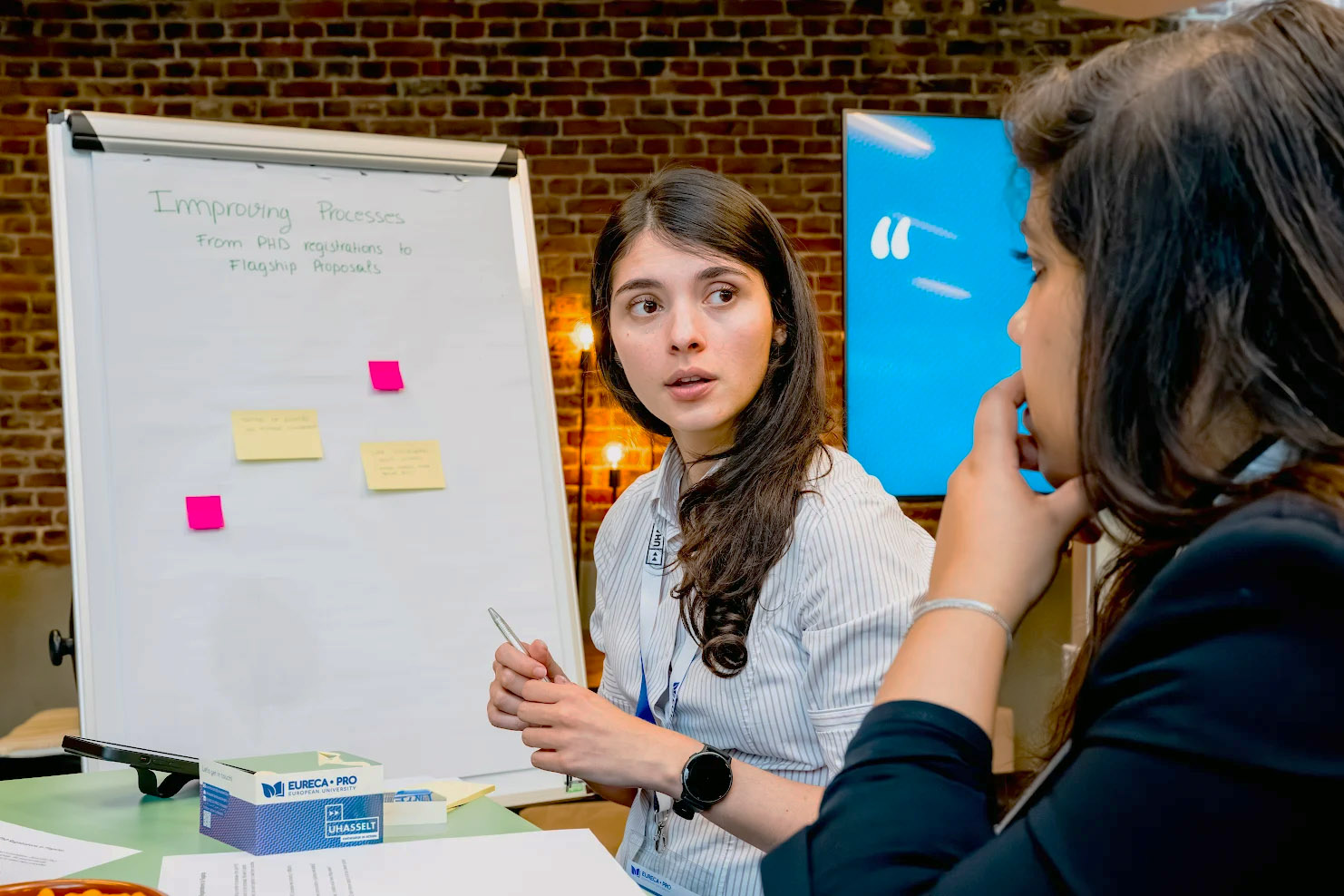
Taking place from 30 November to 4 December 2026, the programme offers one interactive workshop per day, combining hands-on activities, peer learning, and practical exercises in an engaging online format.

Each session focuses on a key competence area from the European Competence Framework, including digital and AI literacy, public speaking and presentation skills, creativity and problem solving, entrepreneurship and innovation through the reuse of dormant patents, and intercultural communication in academia. The workshops are led by experienced trainers and are designed to be highly interactive, with limited participant numbers to ensure active involvement and meaningful exchange. 

Join the second edition of the EURECA-PRO Transversal Skills Week to strengthen your skills, connect with fellow doctoral researchers across Europe, and gain practical tools you can immediately apply to your research and career.  

Registration and Selection

Registration: via Moodle
Registration deadline: 9 November 2026
Confirmation of registration: 16 November 2026
Language: English
Mode: 100% online

The Transversal Skills Week is open to PhD students. As places are limited, participants are selected on a first-come, first-served basis, with priority given to EURECA-PRO Doctoral School members. Participants may register for individual workshops according to their interests.

Due to high demand, we kindly ask you to register only for workshops you are genuinely interested in and motivated to attend.

Please note that submitting a registration does not guarantee a place. Selected participants will receive an email on 16 November and must confirm their participation by 20 November 2026. If you do not confirm by this deadline, your place will be offered to someone on the waiting list.

Applicants who are not initially selected will receive an email informing them that they have been placed on the waiting list. If places become available after the confirmation deadline, applicants on the waiting list will be contacted between 23 and 25 November 2026 and invited to confirm their participation by 26 November.

Practical Information

Certificate of Attendance: Participants who attend the entire workshop and actively participate will receive a certificate of attendance.

No prior knowledge is required to participate in the workshops. However, some workshops may include a short preparatory task to be completed in advance.

Limited Places Available – Register Early!
The first edition of the EURECA-PRO Transversal Skills Week was very popular. Places are limited and workshops are expected to fill up quickly, so we encourage you to register early to secure your spot!

Event coordinators
Doctoral School Working Group:
Hanne Surkyn – Hasselt University
Stefanie Kerkhofs – Hasselt University
Contact: eurecapro.phd(@)uhasselt.be

Don’t miss this opportunity to enhance your skills and knowledge!

Training Topic   

Fundamentals, Insights, and Practical Applications in AI and Machine Learning 
Monday, November 30, 13:00-17:00 (CET)

Yarne Dirikx, Gilles Eerlings, Sebe Vanbrabant
Hasselt University 

Training Topic   

Public Speaking and Presentation Skills 
Tuesday, December 1, 13:00-17:00 (CET)

Assoc. Prof. Suca Muñoz Doyague and Dr. Ángel Morán Muñoz
University of León

Training Topic   

Reviving Dormant Patents: Unlocking Entrepreneurial Opportunities through Exaptation
Wednesday, December 2, 13:30-17:00 (CET)

Assoc. Professor Ferney Osorio and Dr. Fedoua Kasmi  
Université de Lorraine

Training Topic   

Creativity and Problem Solving
Thursday, December 3, 13:00-17:00 (CET)
Jamie McDonald

Training Topic   

Seeing Through Culture: Intercultural Communication in Academia
Friday, December 4, 09:00-13:00 (CET)

Jill Deschner-Warner
Mittweida University of Applied Sciences

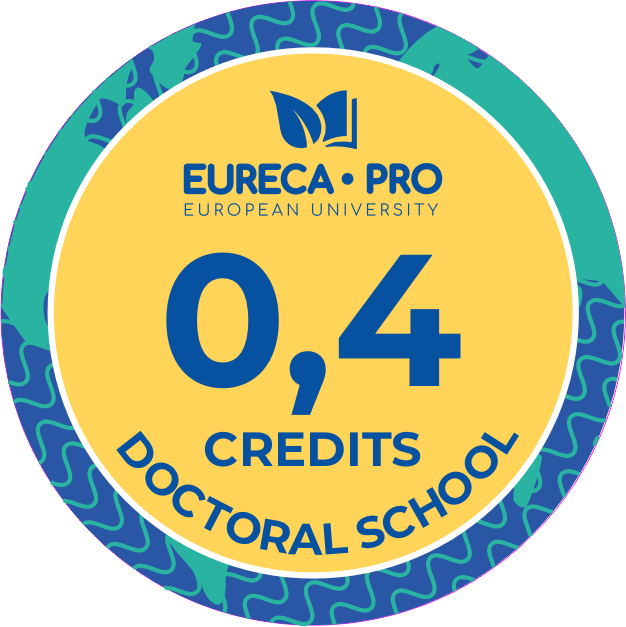
Doctoral School Credits Awarded
Participants may earn 0.4 Doctoral School credits per training
Scroll to Top

Fundamentals, Insights, and Practical Applications in AI and Machine Learning

Yarne Dirikx, Gilles Eerlings and Sebe Vanbrabant  
Hasselt University

Participants in this course will develop a foundational understanding of artificial intelligence (AI), with a particular focus on generative AI and machine learning. Key concepts such as neural networks, deep learning, and large language models (LLMs) will be introduced and explored. The course will examine real-world applications of AI, highlighting its capabilities, limitations, and the ethical considerations involved in its responsible use.

In addition, participants will gain hands-on experience using generative AI tools to support academic research. Through practical exercises, they will learn how AI can assist in conducting literature reviews for research papers, dissertations, and project proposals.

By the end of this course, participants will be able to:
• Explain fundamental concepts and principles of AI and machine learning.
• Critically evaluate opportunities, limitations, and risks of generative AI.
• Reflect on ethical considerations and responsible use of AI in research.
• Use AI tools responsibly and effectively to support academic literature reviews.

Public Speaking and Presentation Skills

Assoc. Prof. Suca Muñoz Doyague and Dr. Ángel Morán Muñoz
University of León

This interactive workshop will focus on developing effective public speaking and presentation skills tailored to professional contexts. Through practical explanations, real-world examples, short presentations, in-class exercises, and interactive feedback, participants will learn how to design and deliver clear, compelling, and well-structured research talks. 

By the end of the session, you will be able to:
• Structure an engaging, attractive, and coherent presentation.
• Apply key principles of verbal and non-verbal communication to enhance clarity and impact.
• Design effective and visually clear slides that support your message.
• Communicate complex ideas in an accessible and audience-friendly manner.

Reviving Dormant Patents: Unlocking Entrepreneurial Opportunities through Exaptation

Assoc. Professor Ferney Osorio and Dr. Fedoua Kasmi
Université de Lorraine

This interactive workshop explores how existing and underutilised patents can become sources of new innovation and entrepreneurial opportunities. Participants will be introduced to the fundamentals of intellectual property (IP), with a particular focus on patents, and will explore how to analyse and understand patented technologies through practical case studies. Building on the concept of exaptation, the repurposing of existing technologies for functions beyond their original intended use, participants will apply a structured methodology to identify alternative applications for patented technologies. Working collaboratively, they will explore how these new applications can be transformed into potential entrepreneurial projects by identifying relevant needs, target users and value propositions.

By the end of the workshop, participants will be able to:
• Understand the fundamentals of intellectual property, particularly patents and their role in innovation and research valorisation
• Analyse and interpret patent information through practical case studies to identify key technological features and functionalities
• Understand and apply exaptation as a methodology for exploring new applications of existing technologies
• Identify and assess potential opportunities arising from the innovative reuse of patented technologies
• Develop and present an initial entrepreneurial project concept based on a new application of an existing technology

Creativity and Problem Solving

Jamie McDonald

Whether you want to use it to generate new ideas for research, for teaching or for any other aspect of academic life, there’s little doubt that an ability to think differently is vital for solving problems, finding new directions and breathing life into projects. Outside of academia, though the context may be different, the skills are equally useful and valued. In this workshop, we use a range of methods and tools to generate new ideas, to see them into practical plans and to keep a constructive mindset. 

By the end of the workshop you will have:
• Understood what supports, and hinders, your creativity
• Five approaches to creativity and thinking differently, including: 

  • effective tools for generating new ideas and
  • a powerful process for managing creativity
  • accessing your creative mind
  • shifting your mindset to allow creative thinking
  • tools to understand and begin solving problems

• Explored these in relation to challenges you face

Seeing Through Culture: Intercultural Communication in Academia

Jill Deschner-Warner
Mittweida University of Applied Sciences

Culture shapes how we communicate in academic life: how we join a discussion, give and receive feedback, handle disagreement, and work in international research teams. In this interactive online workshop, participants reflect on their own communication style and cultural background, and use partner and small-group discussions to share real intercultural experiences from academia. Two frameworks give these experiences structure: Byram’s Model of Intercultural Communicative Competence and the four dimensions of Cultural Intelligence (CQ Drive, Knowledge, Strategy and Action). The focus is on awareness and curiosity rather than mastery, with participants’ different perspectives serving as the main learning material.

By the end of this workshop, participants will be able to:
• Describe their own communication style (directness, formality, feedback and handling disagreement) and explain how their cultural background may shape it.
• Explain the key ideas of intercultural competence using Deardorff’s definition and Byram’s Model of Intercultural Communicative Competence, including critical cultural awareness.
• Distinguish between the four dimensions of Cultural Intelligence and identify which they do well and which they want to strengthen.
• Analyze an intercultural situation from their academic life, such as a group project, a classroom discussion or an email misunderstanding, to find the cultural factors that shaped the outcome, while telling useful cultural patterns apart from stereotypes.
• Apply CQ strategies, such as testing assumptions with clarifying questions and adjusting tone or formality, to improve communication in future academic and professional work.