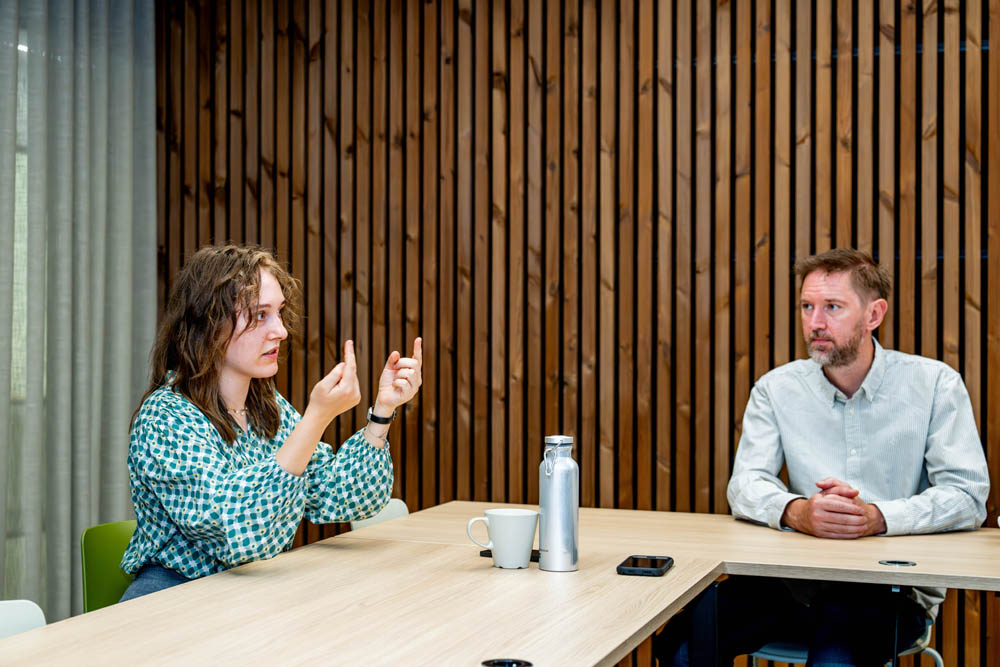
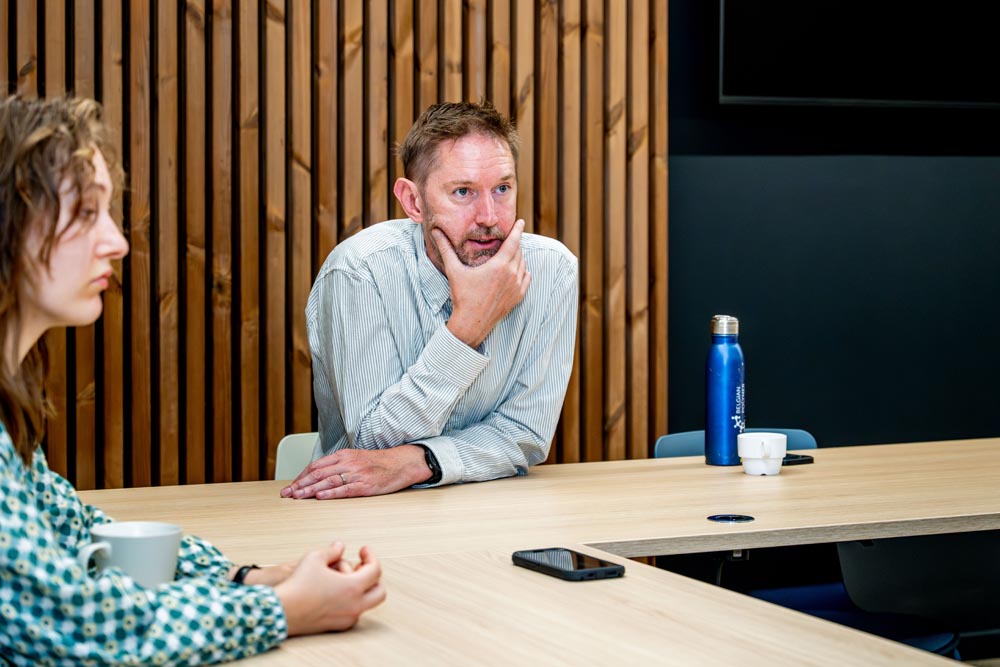
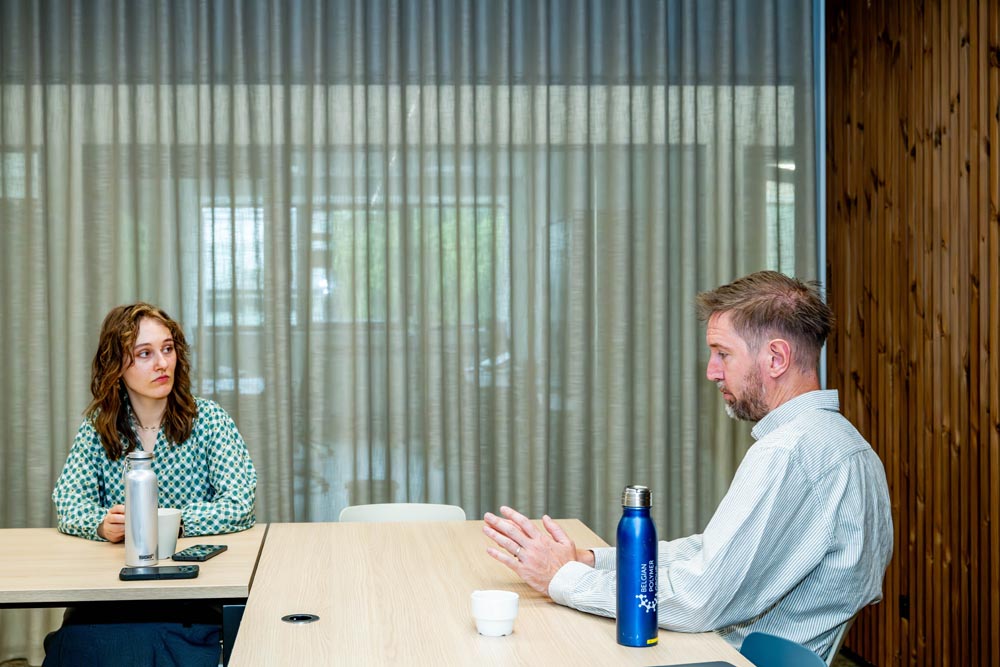
Materials for a sustainable future: a conversation on the EURECA-PRO Joint Master’s specialisation track at Hasselt University
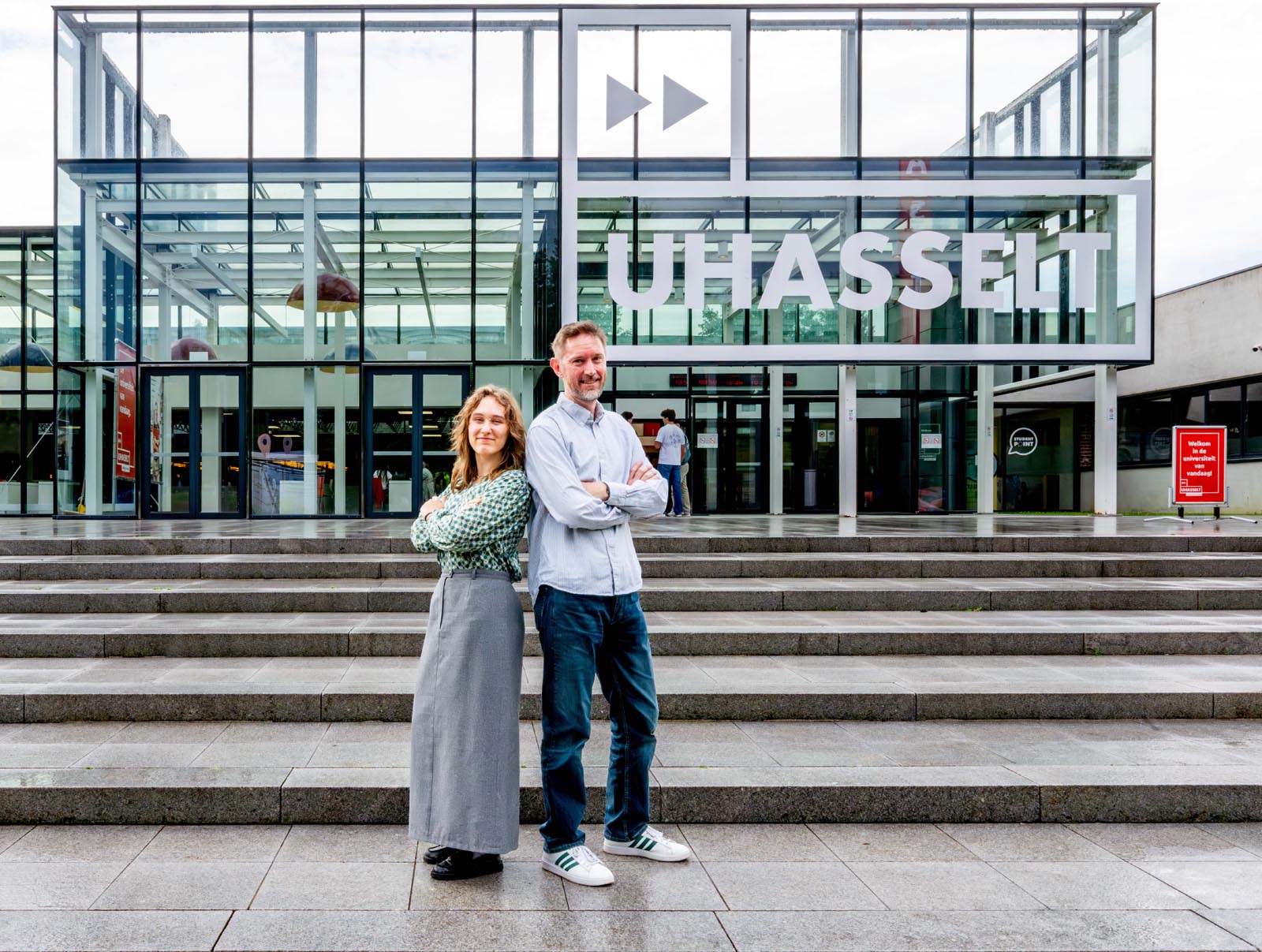
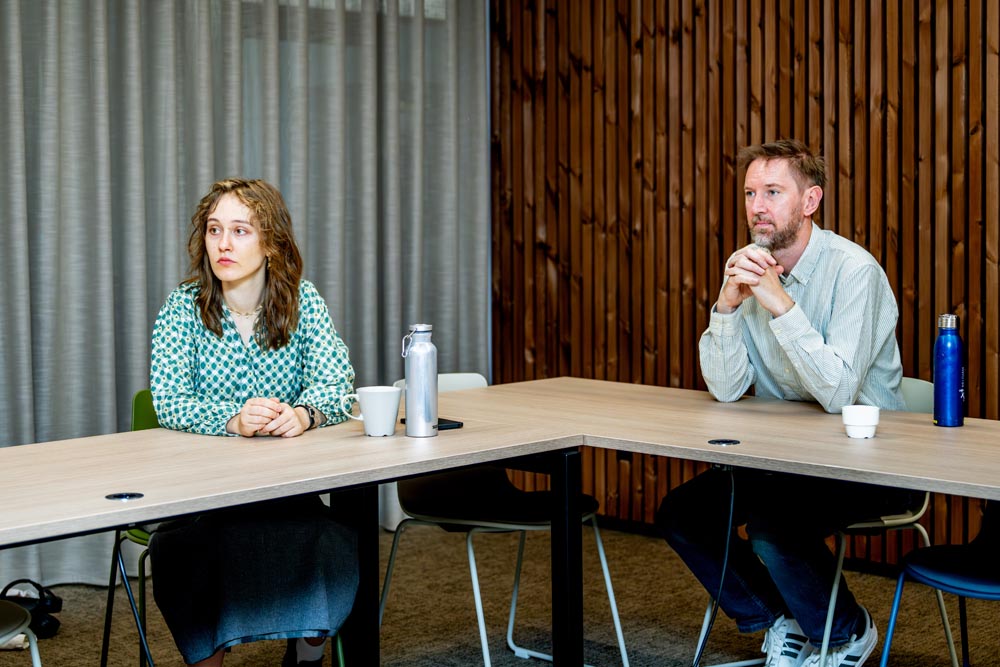
At Hasselt University, the materials specialisation track of the EURECA-PRO Joint Master’s in Responsible Consumption and Production brings together science, sustainability and real-world challenges. For Elena, a student from the Technical University of Leoben, the semester in Hasselt has been an opportunity to explore how materials connect energy, recycling, industry and responsible decision-making. Together with Prof. Louis Pitet, she reflects on why materials matter for the future.
Materials are at the centre of many sustainability challenges. They are part of the products we use, the technologies we develop, the energy systems we rely on, and the waste streams we need to rethink. Within the EURECA-PRO Joint Master’s in Responsible Consumption and Production, the materials specialisation track at Hasselt University helps students understand these connections in a concrete and forward-looking way.
For Prof. Louis Pitet, the track is designed around the direction in which materials science is moving:
“We try to focus on where we think materials science is going,” he explains. “Students need a skill set and knowledge base that are relevant for today’s challenges. The topics are broad, but they all fit under the umbrella of sustainable technology and sustainable materials.”
That broad perspective is also what first attracted Elena Morozova to the Joint Master’s. With a background in environmental sciences, she was looking for a programme that would allow her to explore sustainability from different angles:
“What fascinated me about the programme is that you study many aspects of sustainability,” Elena says. “You learn about mining, metallurgy, waste, materials and industry as a whole. It gives you a broader background and helps you understand where you might want to go deeper.”
Why materials?
At Hasselt University, the materials specialisation track builds on the expertise and course offer of Materiomics, the university’s Flemish-taught master’s programme in materials science. Several courses are shared or closely aligned, allowing EURECA-PRO students to join an existing learning environment while bringing an international perspective to the classroom.
For Prof. Louis Pitet, this connection is one of the strengths of the track.
“There is extensive overlap,” he explains. “A number of courses are offered both to Flemish students and to international students, especially those that are strongly aligned with sustainable technology.”
When choosing her specialisation within the EURECA-PRO RCP master, Elena was drawn to materials because of the many directions the field can open.
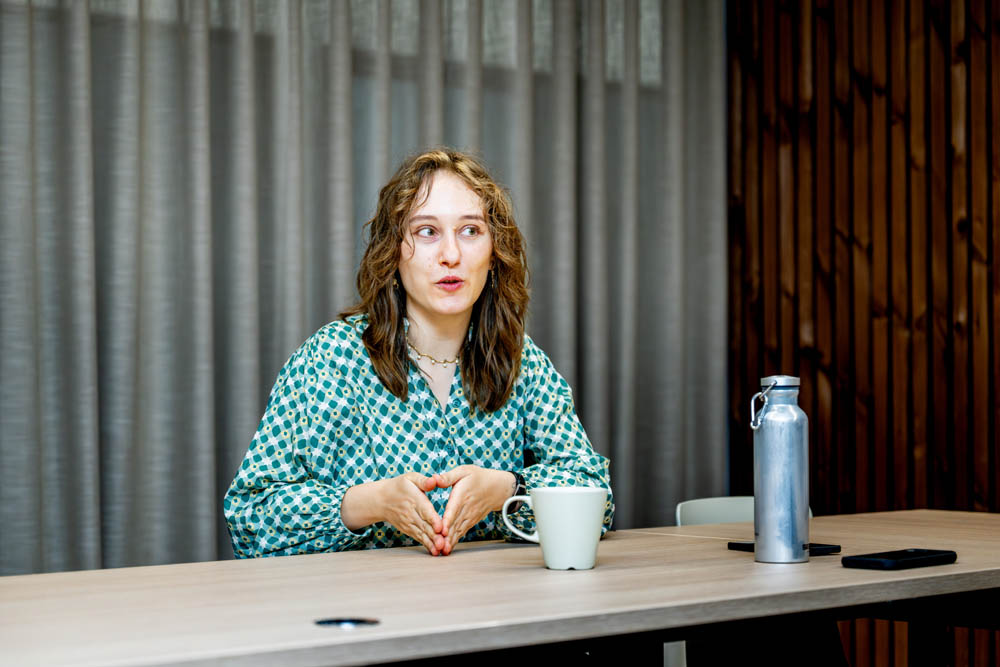
“With materials, you can go in many directions,” she explains. “I always liked physics and chemistry, and here I can go deeper into the science behind materials and connect it to future challenges, for example in sustainable polymers or recycling.”
At Hasselt University, this means looking beyond materials as isolated technical objects. Students explore how materials are designed, used, recovered, and evaluated in relation to wider societal needs. In courses such as sustainable polymers, they work with contemporary topics including bio-based plastics, biodegradation, mechanical recycling, chemical recycling, and microplastics.
According to Prof. Pitet, this approach is very intentional.
“It is not just about fundamental materials science,” he says. “We take that knowledge and apply it to contemporary topics. Students should understand material properties, but also how these materials fit into a wider context.”
For Elena, that context became especially visible in courses linked to solar energy and energy materials. During her semester in Hasselt, she followed several subjects that focused on energy harvesting, reliability, recyclability, and design.
“In the courses here, we look at new materials for harvesting solar energy, but also at current challenges such as reliability, recyclability and design,” she says. “You learn what the current situation is and where things could go in the future.”
Thinking beyond performance
One of the central messages of the materials specialisation track is that materials cannot be judged by performance alone. A material may work well in a product, but still raise questions about sourcing, production, use, recovery or end-of-life.
Prof. Pitet sees this as a major shift in the way future materials specialists need to think.
“In the past, materials were often developed mainly for performance,” he says. “The question was: what function does this material need to serve, and how can it do that in the best possible way? But often, little attention was paid to what happens afterwards.”
This is where the link with responsible consumption and production becomes very concrete. Students are encouraged to ask whether a solution really makes sense across its full life cycle.
“When we talk about recycling plastics, it sounds like a good idea on the face of it,” Prof. Pitet explains. “But you need to look more deeply into the complexities. Does it really make sense? How should we develop the technology to maximise the benefits?”
Elena recognises that same way of thinking in the broader Joint Master’s programme. For her, responsible consumption and production means understanding that sustainability challenges rarely have one simple answer.
“It gives you different perspectives and shows you that there is no single solution,” she says. “A solution for one industry can create a disadvantage for another. Waste from one industry can become a source for another.”
Materials and the energy transition
The conversation quickly moves from plastics and recycling to energy. For both Elena and Prof. Pitet, this is where the relevance of materials becomes especially clear.
“Materials are intrinsically linked to production of goods but also electrification and the future of energy,” Prof. Pitet says. “Materials enable solar power, wind power, battery technology and many of the technologies that will drive a more sustainable future.”
Elena experienced this link not only in her courses, but also during the Circular Engineering Across Disciplines (CEAD) spring school at Hasselt University. There, students from different backgrounds worked together on challenges related to electrification and energy systems.
“One of the topics my group worked on was forecasting: how much energy can you harvest in different regions of the world?” Elena says. “Forecasting was something I had never really thought about before.”
The hands-on aspect of the spring school also stood out to her.
“I really liked the workshop where we built our own solar panel,” Elena adds. “I like doing things with my hands, and I still have it in my room.”
For Prof. Pitet, experiences like these show why interdisciplinary learning matters. Materials may be a specific field, but they are connected to engineering, energy, industry, circularity and policy choices.
“Students should be able to look at a challenge and ask: is this the best way to do it?” he says. “That kind of approach can be applied to many different things.”
Learning by doing
The materials learning environment at Hasselt University also includes a strong hands-on component. Within the Materiomics programme, students are encouraged to gain experience beyond the classroom through internships and research-based projects, often in collaboration with companies working on sustainable technology.
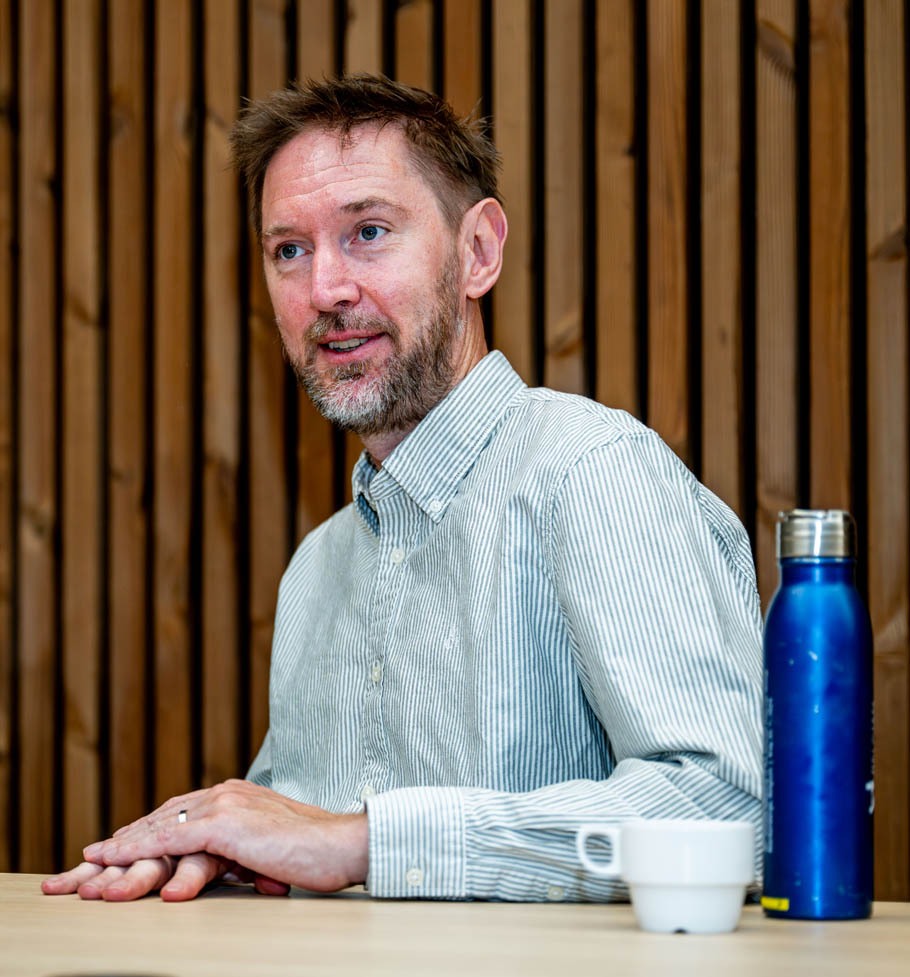
Prof. Pitet explains that students are connected with organisations active in areas such as bio-based materials, recycling, batteries and sustainable polymers. “We try to find partners who are at the forefront of sustainable technology,” he says. “Students work on projects that are actually relevant for the company. That gives them hands-on experience.”
For international EURECA-PRO students, there are also opportunities to become involved in research projects, provided this is arranged in advance through their learning agreement. Elena herself explored the possibility of joining an ongoing project linked to the recyclability of solar panels.
Preparing students for industry and research
The materials specialisation track is also designed to prepare students for future roles in industry and research. Students learn to combine technical understanding with broader sustainability questions, which is increasingly relevant for companies working on sustainable technologies, recycling, energy systems or materials innovation.
Prof. Pitet believes students should already bring this mindset with them when they enter the workforce.
“When I did my master’s and later started working in industry, these questions were not always central,” he says. “A lot of that mindset came later, on the job. Today’s students should already be thinking in this way when they start their careers.”
For Elena, the broadness of the Joint Master’s initially felt like something she would need to explain carefully. The programme combines several fields, and its full title reflects that complexity. But she now increasingly sees this as an advantage.
“At first, I wondered how I would explain such a broad programme on my CV,” she says. “But I realised that this broad perspective can be something unique. Many students specialise in one specific area, while this programme helps you connect knowledge from different industries.”
That ability to connect is important in areas such as recycling, circularity and critical raw materials. Elena points out that Europe’s future independence also depends on how well valuable materials can be recovered and reused.
“When we think about waste, we are also thinking about materials that Europe may lack, such as critical raw materials or rare earth elements,” she says. “If we can recycle them and keep them in use, that becomes very important.”
A different reflex for future materials specialists
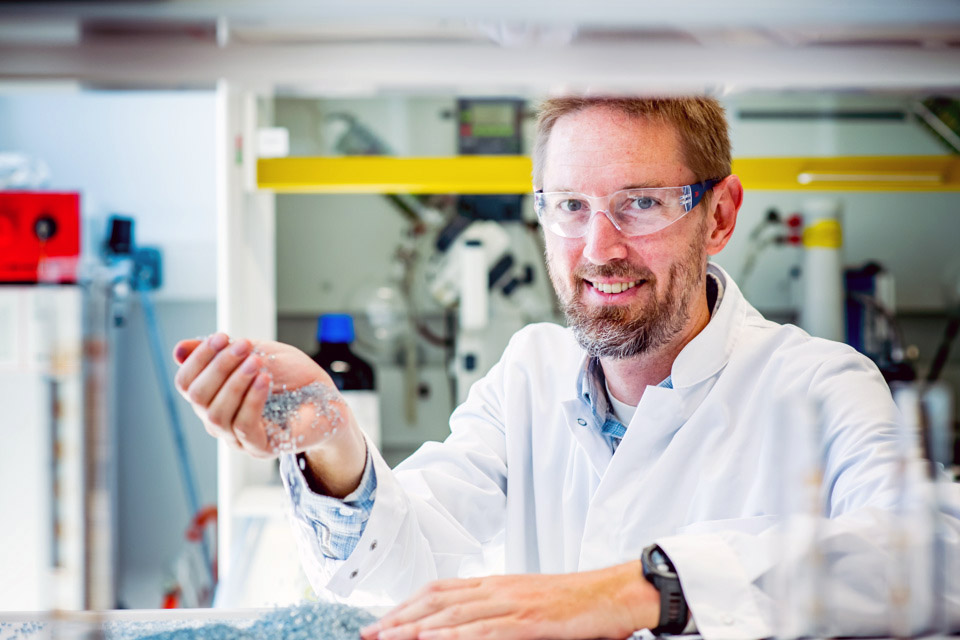
For current and future students, the materials specialisation track offers more than a set of technical courses. It helps them develop a reflex that Prof. Pitet considers essential: thinking about the full life cycle from the very beginning of materials development.
“Before, the question was often: wouldn’t it be cool if we could make something that does this?” he says. “Now it should be: wouldn’t it be cool if we could make something that we can recover and turn into a new material? That is much more interesting.”
Elena links this mindset to the systems perspective of the Joint Master’s. In her view, studying responsible consumption and production means learning how industries, regions and technologies can be connected in smarter ways.
“There is no single solution for every industry or every region,” she says. “You need to understand the local situation, the industries that are present, the waste streams and the possibilities for collaboration.”
That combination of local awareness and international learning is also part of her experience in Hasselt. Coming from Leoben, she found herself in a different academic environment, with a larger campus, green surroundings and a strong cycling culture.
“At the university, I was impressed by the campus,” she says. “It felt much bigger than what I was used to, with many buildings and a lot of green space.”
Although most of her courses were with local Materiomics students, she felt welcomed by her fellow students and appreciated their support during her semester in Belgium.
Finding a way forward
For Prof. Pitet, the hope is that students leave the materials specialisation track with a broader sense of responsibility. Future materials specialists should not only ask how to make something work, but also how it will be produced, used, recovered and reused.
“Nothing should be developed without considering the full life cycle,” he says. “That also applies to the technologies that help us become more sustainable, whether it is electrification or something else. Those materials should also be considered at the end of their life.”
For Elena, that is exactly where the value of the Joint Master’s lies: in helping students see connections and find pathways between different fields.
“You learn a little bit about many connected fields,” she concludes. “That helps you understand where improvements can be made, who you need to talk to, and how different industries might work together. In the end, it helps you find a way forward.”
In that sense, the materials specialisation track at Hasselt University gives EURECA-PRO students more than technical expertise. It gives them a way of thinking that is deeply connected to the mission of responsible consumption and production: understanding complexity, asking better questions and helping shape more sustainable technologies for the future.
Curious to learn more about our Joint Master in Responsible Consumption and Production?
Check out this page!