

From research to international connections: a doctoral mobility in Poland
As part of the EURECA-PRO alliance, Rita Theresa El Kahi, PhD student at Université de Lorraine, took part in InterTechDOC 2026 at the Silesian University of Technology in Gliwice, Poland. Bringing together more than 110 researchers from different countries and disciplines, the event gave her the opportunity to present her research on lipid nanocarriers, exchange ideas with an international scientific community and develop new academic and personal connections.
1) What motivated you to choose a mobility experience within the EURECA-PRO alliance, and why this particular partner?
What motivated me to choose a mobility experience within the EURECA-PRO alliance was, above all, the opportunity to step outside my usual academic environment and discover a different way of working, learning and exchanging ideas. I wanted to have an experience that was academic, professional and personal all at once, while meeting people from a wide range of backgrounds.
I chose the InterTechDOC 2026 mobility programme, organised at the Silesian University of Technology in Gliwice, Poland, because it offered an international and interdisciplinary setting that was particularly well suited to doctoral researchers. The opportunity to represent the University of Lorraine and present my research was also a key motivation. My PhD research aims, in particular, to better understand how certain characteristics of lipid nanocarriers may influence their ability to deliver medicines to the brain, with potential applications in the field of neurodegenerative diseases, including Alzheimer’s disease. I wanted to compare my ideas with other scientific approaches and improve the way I communicate my research.
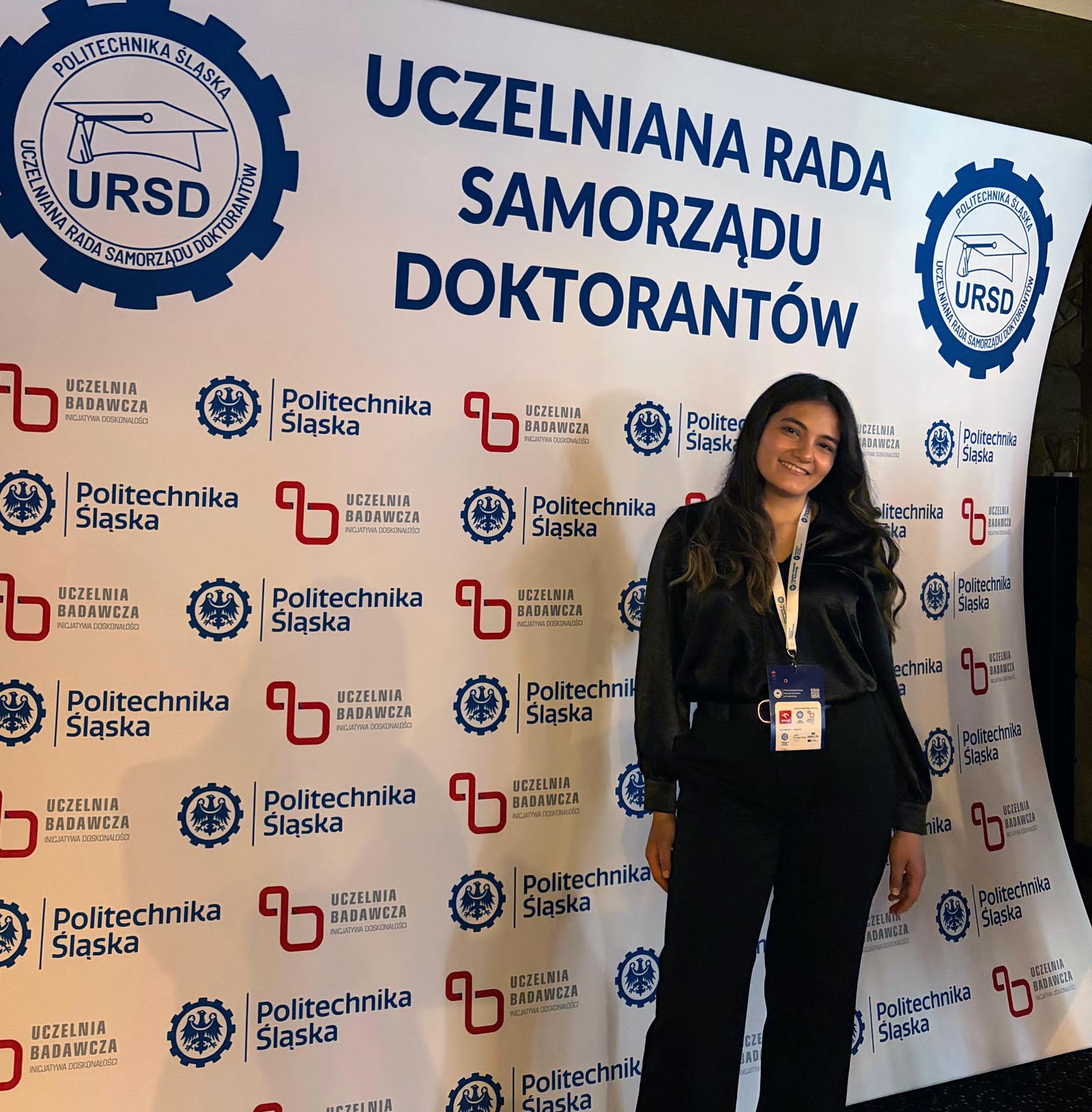
The EURECA-PRO alliance creates meaningful connections between European universities and, above all, between the people who make up those universities. The participation of more than 110 researchers from different countries and disciplines, together with the support of NAWA, made this mobility experience an exceptional opportunity to exchange ideas, expand my network and consider future collaborations. The experience also led to genuine friendships, which are now opening up new opportunities to travel and, I hope, to meet again in other countries some of the people I encountered during the mobility.
2) How did this mobility experience contribute to your academic or personal development?
This mobility experience contributed to my development on several levels. Academically, it gave me the opportunity to discover a wide range of research projects and better understand the importance of exchanges between disciplines, universities and countries. Presenting my work to an international audience encouraged me to think about how to make my subject clearer and more accessible to people from different fields. Receiving an award for my presentation was a great source of encouragement and gave me greater confidence as I continue my PhD. This recognition also reinforced my belief that my work can be genuinely valuable and may ultimately help address important scientific and societal challenges.
The training sessions that followed the conference, dedicated to “Future Ready Scientists”, were also extremely enriching. They focused on innovation, interdisciplinary collaboration and the societal impact of research. They reminded me that the role of researchers is not only to produce knowledge, but also to consider how their work can respond to real-world challenges.
On a personal level, this experience pushed me outside my comfort zone. Being in a country where I did not speak the language and adapting to a new environment, even in simple situations such as shopping without understanding the language or being familiar with the local currency, taught me that these difficulties can ultimately be overcome with curiosity, patience and an open mind.
3) What was the most surprising or memorable moment of your stay?
What struck me most were the discussions that took place after the different researchers’ presentations. Participants would spontaneously approach one another to talk about their projects, identify common interests and think about how they might collaborate or support each other. For example, someone might explain that a professor at their university was working on a similar topic and offer to put them in contact. I realised that a simple conversation could sometimes become the starting point for a future collaboration between disciplines, universities, or even between academia and industry.
Beyond the scientific dimension, the personal encounters were also particularly memorable. I spoke with people from several continents. Some were studying in their home countries, while others, like me, had chosen to leave their country to pursue their studies elsewhere. We spoke a great deal about that choice, the difficulties it can involve, but also everything the experience can bring. Some people hope to return to their home country after their studies, while others are considering building their future elsewhere. These conversations gave me new perspectives that went far beyond research, particularly on life, identity, personal choices and the way each person imagines their future.
Even informal moments, such as coffee breaks, were enriching. Small cultural details, such as the different ways people drink tea or share a meal, could become the starting point for fascinating conversations and sometimes new friendships.
4) How has this experience influenced your future academic, professional or personal plans?
This experience strengthened my desire to continue working in an international environment and to take advantage of new mobility and collaboration opportunities. Academically, it helped me better understand the importance of building a network and exchanging ideas with people working on different, but sometimes complementary, subjects. I saw how quickly ideas and projects can evolve when they are shared with people who bring different experiences, expertise and perspectives.
The award I received for my presentation encouraged me to continue my research, improve the way I communicate my results and seek out new opportunities to present my work internationally. Professionally, this mobility experience strengthened my interest in interdisciplinary projects and in collaborations between universities, research and industry. In the longer term, I hope to contribute to innovations that have a tangible impact beyond Europe’s borders, particularly in my home country, Lebanon.
On a personal level, this mobility experience gave me greater confidence in my ability to adapt to new environments. It also enriched my personal culture through the discovery of Poland, its traditions and its history. Visiting historical sites in Gliwice, including its famous wooden radio tower, as well as discovering the landscapes of Szczyrk, made the experience even more memorable. Being able to see in real life places steeped in history that we sometimes know only through books was particularly meaningful. This mobility experience therefore strengthened my passion for travel and my desire to continue discovering new countries, cultures and ways of seeing the world.
