Discovering EURECA-PRO's Flagships:
Sustainable Mining & Resources
How can Europe secure the resources it needs for the green transition while reducing environmental and societal impacts?
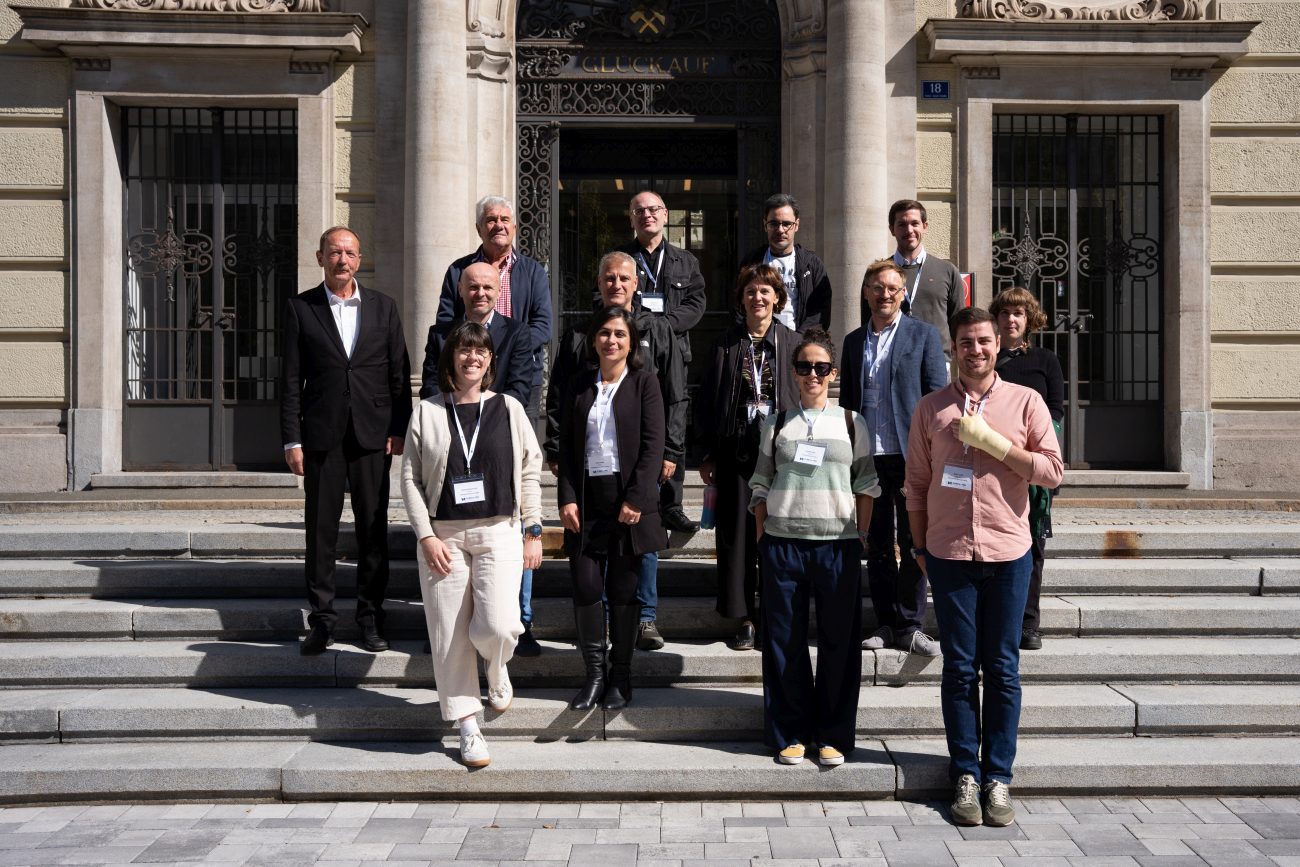
The Sustainable Mining & Resources Flagship brings together expertise in mining and mineral processing, recycling and circular economy, environmental sciences, and social sciences to explore more sustainable approaches to resource management and territorial development. This fourth and final episode in our series introduces a community working across the technical and socio-territorial dimensions of resources.
What is the aim of your Flagship initiative, and what areas of expertise does it bring together within the EURECA-PRO Alliance?
Our Flagship starts from a simple observation: Europe needs more raw materials to accomplish its green transition, but we cannot address this challenge by simply extracting more. We need to rethink how we extract, use, recycle and manage resources, involve local communities along the process and ensure a sustainable development for the impacted territories, even after the mine closure. The Flagship therefore connects expertise that is too often separated: mining and mineral processing, recycling and circular economy, environmental sciences, and social sciences dealing with territorial development, governance and citizen participation.
This combination allows us to look at resources not only as materials to be extracted and processed, but also as part of territories, economies and societies which have a specific history before the mine and a future after it. It is this connection between the technical and socio-territorial dimensions of resources that we want to develop through this flagship initiative within EURECA-PRO.
What research questions or societal challenges do you hope to help address through this European academic community?
The Flagship addresses a fundamental question: how can Europe secure the resources it needs while reducing environmental and societal impacts? We want to explore how mining can become more responsible, how secondary resources can be effectively integrated into a circular economy, and how products can be designed for recycling and resource efficiency. At the same time, we address the challenges faced by territories affected by both the renewal and the closure of mining activities. This includes understanding how communities can be more meaningfully involved in resource projects, how mining projects can serve their host territory (and not the contrary) to promote a desirable future defined by local communities and how we can move beyond the narrow scope of “social acceptability” towards a broader logic of just and sustainable (environmentally and temporally) territorial development.
In your view, what makes a EURECA-PRO Flagship initiative strong, and what do you hope to achieve collectively in the coming years?
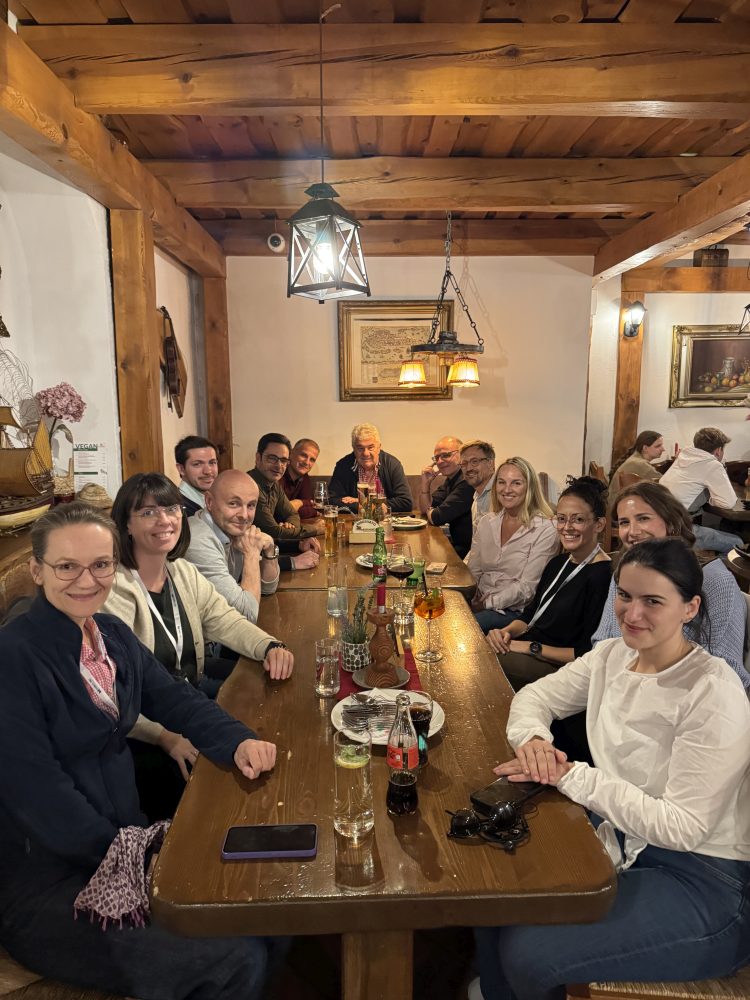
For us, a strong Flagship is not simply a network of researchers working on the same topic. Its value comes from bringing together people who approach the same problem from genuinely different angles and giving them opportunities to work on something they could not address alone. In the coming years, we would like to turn the Flagship into an active European community, with joint research projects, student exchanges, interdisciplinary education and stronger links with industry, public authorities and local communities. We also want to use the diversity of the EURECA-PRO territories as an advantage: some are facing the prospect of new mining, while others are dealing with mine closure and post-mining development. Comparing these experiences could help us identify approaches that are relevant beyond a single country or territory and enable the sharing of experiences between the alliance’s territories, with member universities (as “civic university”) acting as intermediaries for exchange and emulation.
Contacts:
Leads:
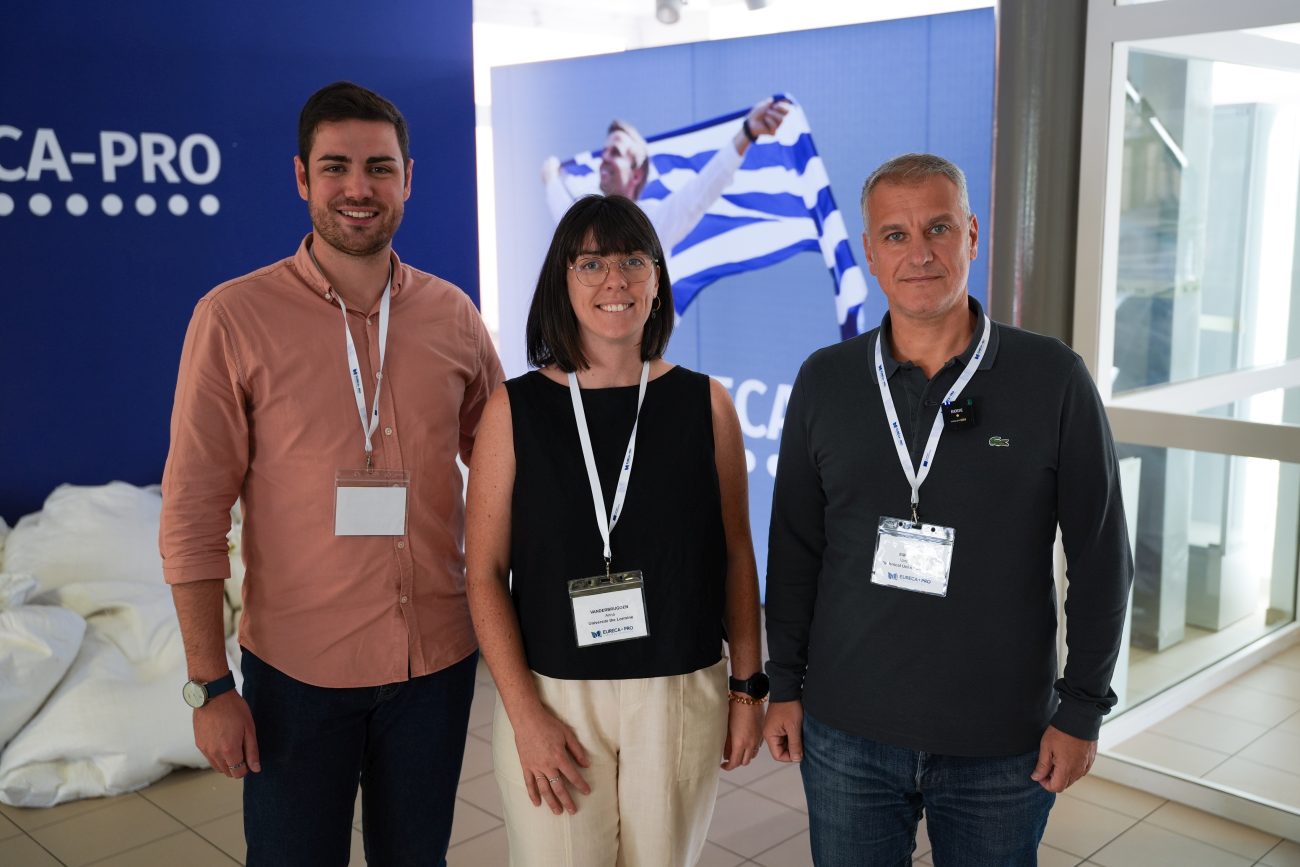
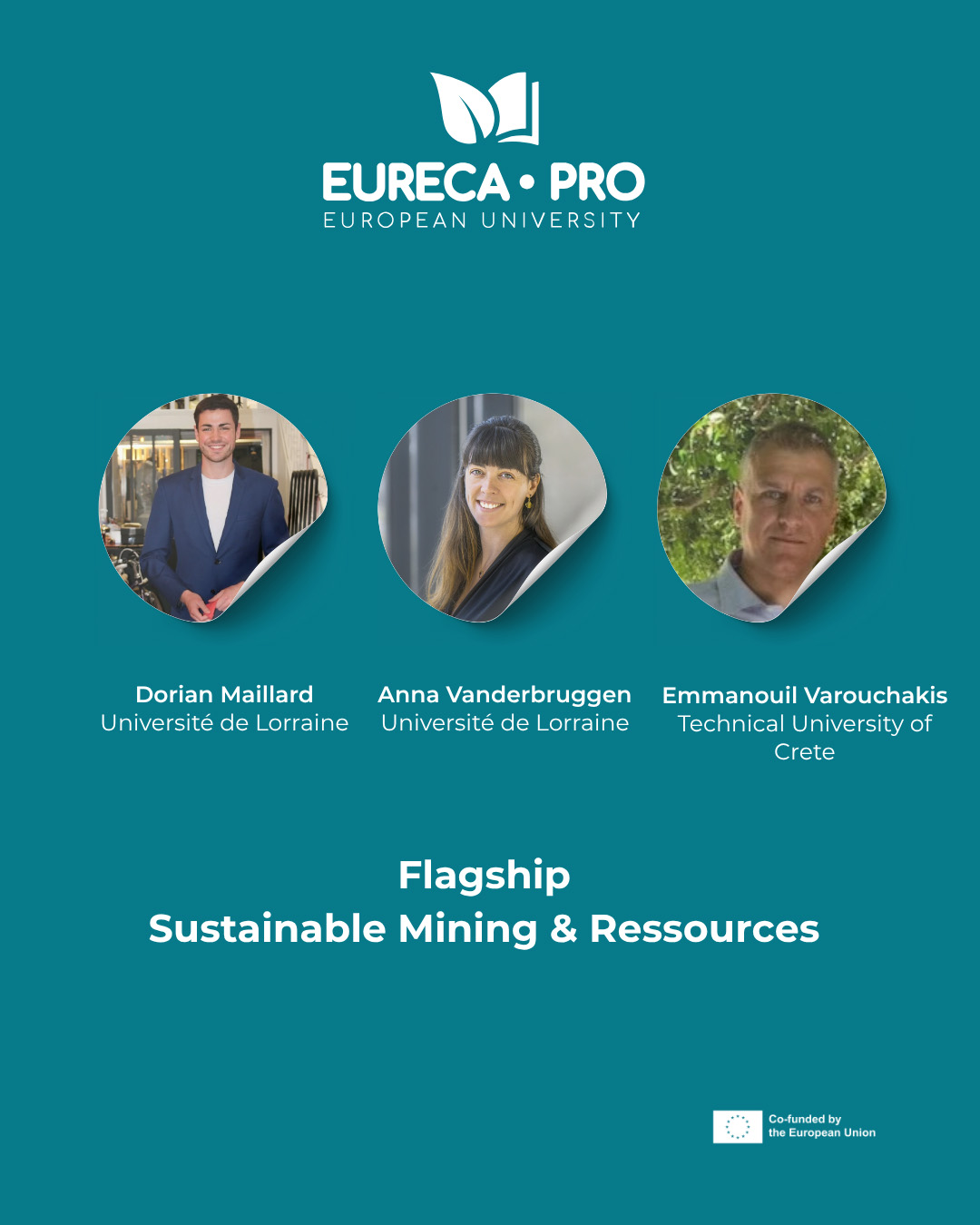
Dorian Maillard, PhD candidate on post-mining redevelopment especially through the territorialisation of industrial decarbonisation, Université de Lorraine
Anna Vanderbruggen, Associate Professor on Mineral processing and Recycling, specialized in Battery recycling, Université de Lorraine
Emmanouil Varouchakis, Assistant Professor on Geostatistics in Environmental Mining-Sustainable Development, Technical University of Crete
Contacts:
Dorian Maillard (Université de Lorraine): dorian.maillard(at)univ-lorraine.fr
Anna Vanderbruggen (Université de Lorraine): anna.vanderbruggen(at)univ-lorraine.fr
Emmanouil Varouchakis (Technical University of Crete): evarouchakis(at)tuc.gr