Microcredential: Twin Transition in the EU Context - Shaping Digital Innovation for Sustainability
Mittweida University of Applied Sciences (HSMW)
Online lectures | 05.10.2026-26.01.2027
Registration possible until 13.10.2026
- Upcoming events
This programme is aimed at students and professionals from all academic disciplines and occupational groups who, as part of their studies or professional practice, engage with social and technological change.
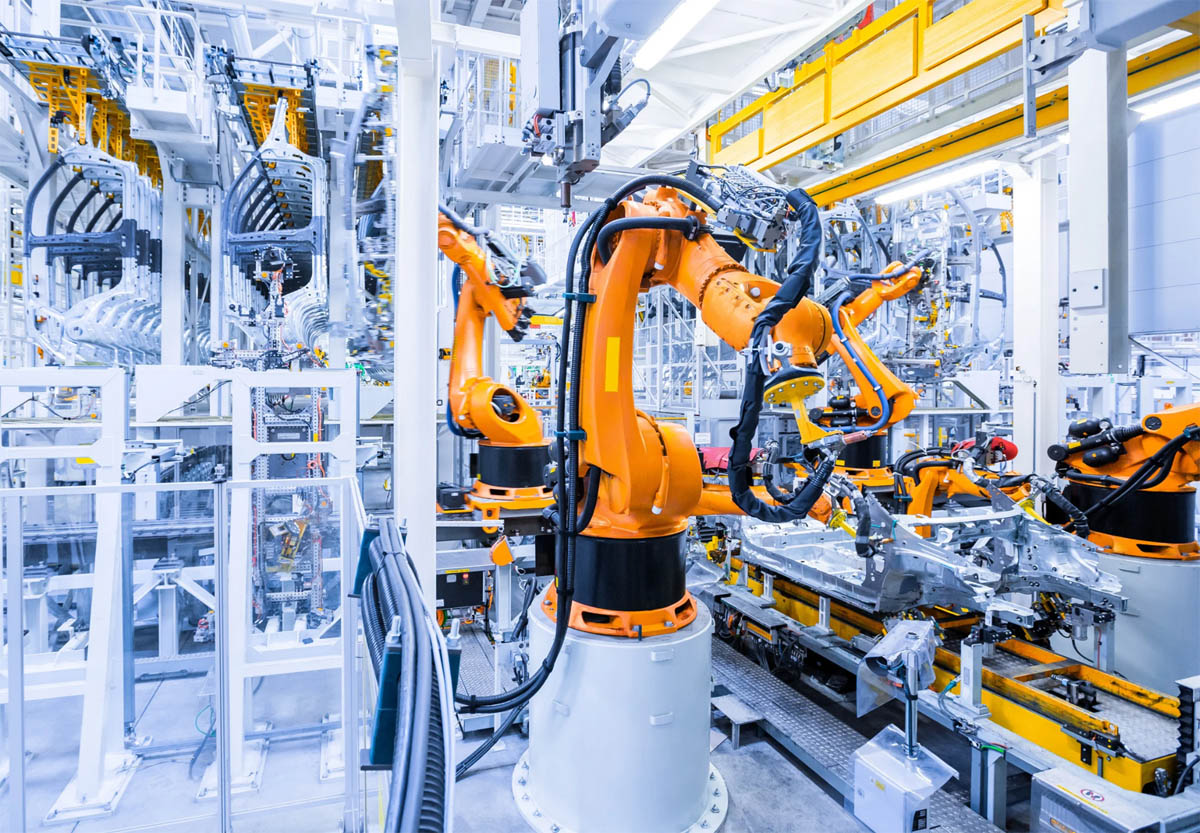
The lecture introduces participants to the connections between digital industrial technologies and sustainability by combining two complementary perspectives: Industry 4.0 and technology assessment (TA). The lecture covers the basic principles and concrete examples of Industry 4.0 and illustrates, for example using additive manufacturing (AM), how data-driven design, automation, and flexible production are reshaping industrial processes.
Another focus of the course is an introduction to technology assessment as an approach for systematically analysing the broader impacts of technological change. Participants are introduced to the core dimensions of technology assessment, including environmental impacts, social consequences, and economic and governance-related aspects.
By linking Industry 4.0 and technology assessment, the course situates these discussions within the framework of the “Twin Transition”—understood as digital and green transformation—which is currently being promoted in European policy strategies.
Key information
- Course duration: 5 October 2026 to 26 January 2027
- Registration possible until 13 October 2026
- Synchronous online lectures in English incl. self-organised project phases
- Participants should have an interest in issues relating to technological and social change. Relevant prior education or professional experience would be an advantage.
- Seats: 18
- Lectures and seminar workload: 45 hours
- Self-managed workload: 105 hours
- Participants receive a certificate after successful completion.
Learning outcomes:
Participants learn to integrate technical and societal perspectives. The course demonstrates that shaping a sustainable digital future requires more than just technical optimisation. It demands a critical examination of socio-technical trade-offs, well-founded decision-making, and collaboration between engineering, the social sciences, industry, and politics.
By the end of the course, participants will be able to:
- understand what Industry 4.0 and 5.0 is and be familiar with its applications and potential for new production cycles,
- describe the most important Industry 4.0 technologies and understand that there are sustainability implications that must be taken into account,
- gain insights into the core concepts and history of technology assessment (TA) as well as the importance of critical reflection on socio-technical trade-offs,
- explain the concept of the “Twin Transition” as a combination of digital and green transformation,
- Have an overview of the EU strategies in which the “Twin Transition” is being implemented.
Lecture Schedule
Lecturers

Prof. Dr. Inga-Maria Eichentopf

Ass. Prof. Dr. Flaviana Tagliaferri
Schedule
The lecture starts on 5 October 2026 and takes place on Tuesdays from 15:45 till 17:15 each week and the seminar will be held weekly from 17:30 to 19:00. The programme ends on 26 January 2027.
Content
-
1. Digital industrial transformation and Industry 4.0/5.0:
Foundations of Industry 4.0 and the human-centred and sustainability-oriented perspective of Industry 5.0 are taught. Moreover, selected technologies such as cyber-physical systems, the Internet of Things, data-driven production, automation, additive manufacturing, digital twins, and predictive maintenance and their potential and limitations for sustainable production will be introduced in the course. -
2. The Twin Transition in the EU context:
Connections and controversies between digital and green transformation are discussed. Ecological, social, economic, and governance dimensions of sustainability as well as resource and energy implications of digitalisation, circular-economy perspectives and an overview of relevant European policy frameworks, including the European Green Deal, the EU Digital Strategy, the Circular Economy Action Plan, and AI governance are presented. -
3. Technology assessment concepts and tools:
Objectives, development, and core principles of technology assessment are introduced in the lecture. A socio-technical perspective on technological change and an analysis of intended, unintended, direct, and indirect impacts are explored during the sessions. Application of selected tools such as stakeholder analysis, scenario development, and multi-criteria assessment are presented to compare alternative courses of action. -
4. Applied interdisciplinary case study:
Student teams select and scope a Twin Transition case, formulate an assessment question, research the technological and societal context, and apply suitable technology-assessment tools. They identify impacts, stakeholder interests, uncertainties, and trade-offs across the four sustainability dimensions, develop recommendations for responsible design or governance, and present their results for discussion and feedback.