EURECA-PRO

EURECA-PRO
Transversal Skills Week

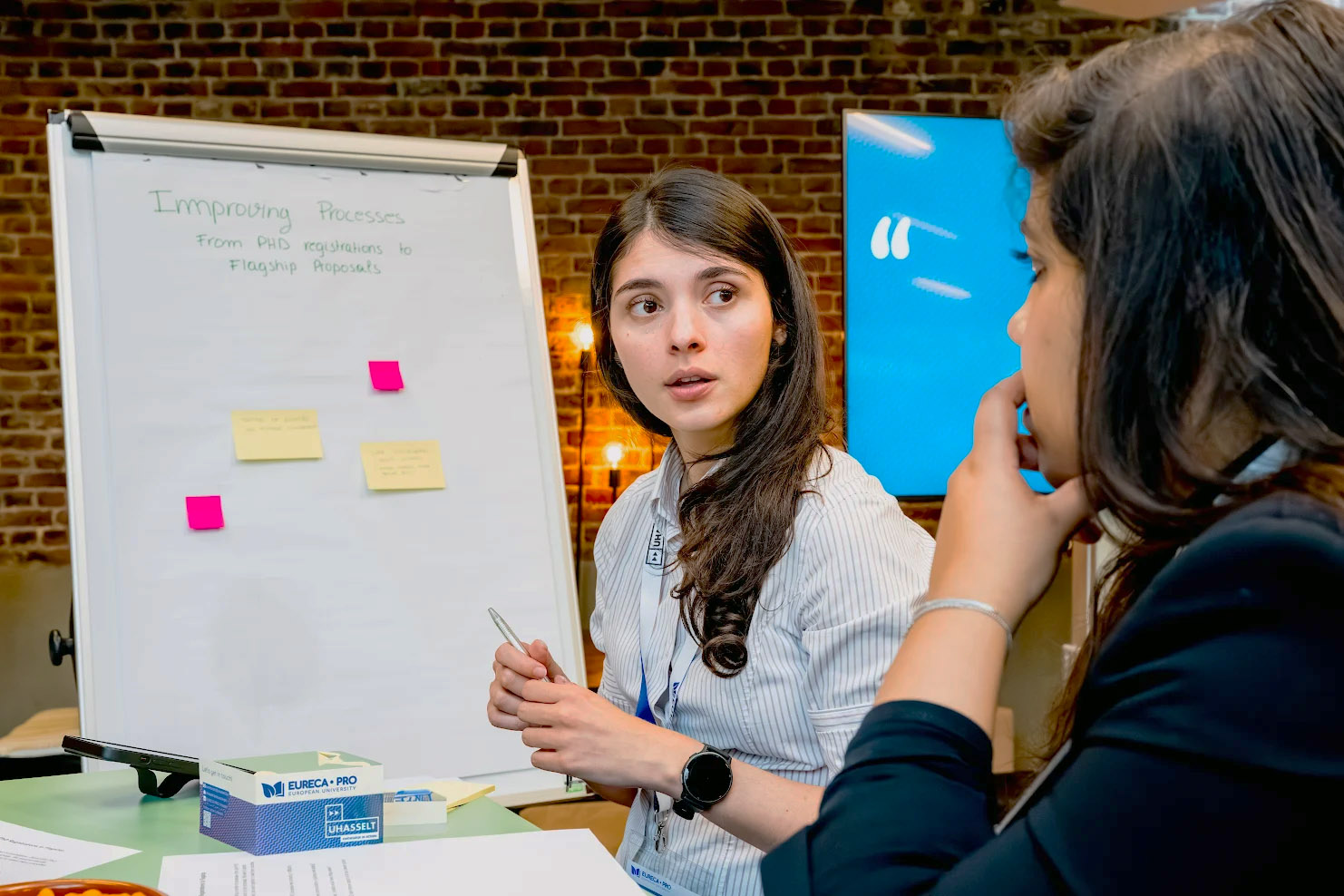
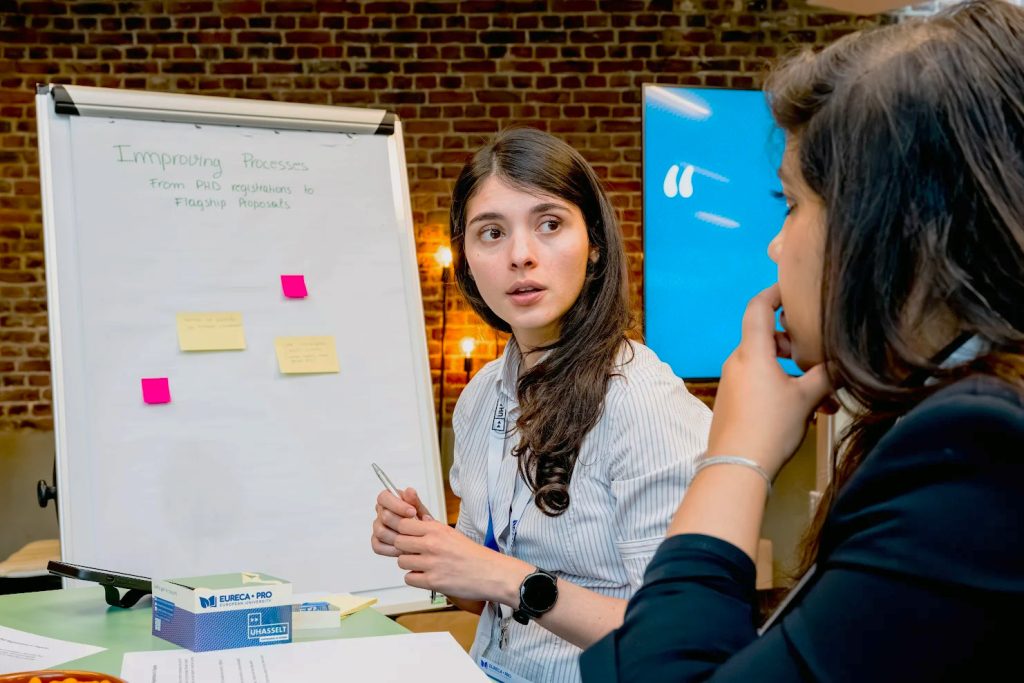
Taking place from 2–6 March 2026, the programme offers one interactive workshop per day, combining hands-on activities, peer learning, and practical exercises in an engaging online format.
2 Mar, 2026

EURECA-PRO Transversal Skills Week is a five-day online training event designed to support doctoral students in developing essential transversal skills for academic and professional success.

Each session focuses on a key competence area from the European Competence Framework, including networking and collaboration, public speaking and impact, creativity and problem solving, project and self-management, and digital and AI literacy for research. The workshops are led by experienced trainers and are designed to be highly interactive, with limited participant numbers to ensure active involvement and meaningful exchange.

Join the EURECA-PRO Transversal Skills Week to strengthen your skills, connect with fellow doctoral researchers across Europe, and gain practical tools you can immediately apply to your research and career. 

Key details

The Transversal Skills Week is open to PhD students, with priority given to members of the EURECA-PRO Doctoral School. Participants selection is based on a first-come, first-served principle, and participants may register for individual sessions according to their interests. Upon completion, participants will receive a digital certificate and access to supporting training materials for each completed workshop. 

Registration: via Moodle
Registration deadline: 9 February 2026
Confirmation of registration: 16 February 2026
Language: English
Mode: 100% online

Training Topic   

Networking for Researchers 

Monday, March 2, 13:00-17:00 (CET)

Joeri Wielandts    
University of Leuven 

Training Topic   

Public Speaking and Presentation 

Tuesday, March 3, 13:00-17:00 (CET)

Assoc. Prof. Suca Muñoz Doyague and
Dr. Ángel Morán Muñoz   

University of León

Training Topic   

Creative Thinking and Problem Solving

Wednesday, March 4, 13:30-17:00 (CET)

Jamie McDonald
www.jmcd.co.uk

Training Topic   

Networking for Researchers 

Monday, March 2, 13:00-17:00 (CET)

Joeri Wielandts     
University of Leuven

Training Topic   

Public Speaking and Presentation 

Tuesday, March 3, 13:00-17:00 (CET)

Assoc. Prof. Suca Muñoz Doyague and
Dr. Ángel Morán Muñoz   

University of León 

Training Topic   

Creative Thinking and Problem Solving

Wednesday, March 4, 13:30-17:00 (CET)

Jamie McDonald  
www.jmcd.co.uk

Training Topic   

Crash Course in Project Management

Thursday, March 5, 13:00-17:00 (CET)

Dr. Eng. Seweryn Tchórzewski  
Silesian University of Technology 

Training Topic   

Introduction to AI and Machine Learning 

Friday, March 6, 13:00-17:00 (CET)

Prof. Dr. Kris Luyten,
Prof. Dr. Gustavo Rovelo,
Prof. Dr. Davy Vanacken  

Hasselt University 

Doctoral School Credits Awarded
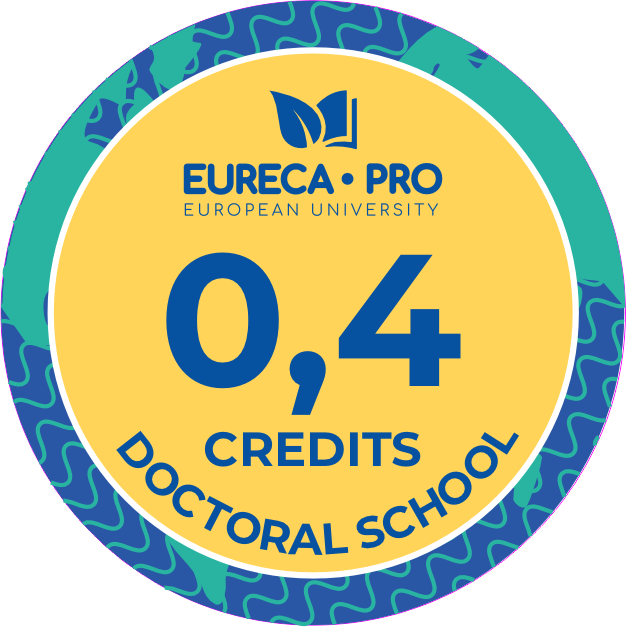
Participants may earn 0.4 Doctoral School credits per training
Training Topic   

Crash Course in Project Management

Thursday, March 5, 13:00-17:00 (CET)

Dr. Eng. Seweryn Tchórzewski  
Silesian University of Technology 

Training Topic   

Introduction to AI and Machine Learning 

Friday, March 6, 13:00-17:00 (CET)

Prof. Dr. Kris Luyten,
Prof. Dr. Gustavo Rovelo,
Prof. Dr. Davy Vanacken  

Hasselt University 

Doctoral School Credits Awarded
Participants may earn 0.4 Doctoral School credits per training

Event Coordinators

Doctoral School Working Group

Hanne Surkyn – Hasselt University
Stefanie Kerkhofs – Hasselt University

Contact: eurecapro.phd(@)uhasselt.be 

Don’t miss this opportunity to enhance your skills and knowledge!

Scroll to Top

Networking for Researchers

Joeri Wielandts    
University of Leuven

The real power of networking lies in connecting with people and building strong, professional relationships. In doing so you will surround yourself with people who are happy to help you to achieve your goals. These networking skills are important both inside and outside academia, but in this workshop we’ll focus on how to network in your current academic job context. 

In this very practical oriented online workshop we’ll cover the basics of networking, learn how to introduce yourself and your work in an interesting manner, find out how you can prepare to get more results from networking at conferences and we conclude with concrete tips to optimise how you use / can start using LinkedIn.

Participants of this workshop will:

  • Get a better understanding of how networking works
  • Be able to introduce themselves and their research in an attractive manner that sparks a conversation
  • Know how to prepare better for their next conference so they’ll have better outcomes
  • Can use simple strategies to start and keep a good conversation going
  • Know what to do after an event so the efforts made don’t get lost
  • Can optimise their LinkedIn use to get desired outcomes

Public Speaking and Presentation

Assoc. Prof. Suca Muñoz Doyague and Dr. Ángel Morán Muñoz   
University of León

This interactive workshop will focus on developing effective public speaking and presentation skills tailored to professional contexts. Through practical explanations, real-world examples, short presentations, in-class exercises, and interactive feedback, participants will learn how to design and deliver clear, compelling, and well-structured research talks.

By the end of the session, participants will be able to:

  • Structure an engaging, attractive and coherent presentation.
  • Apply key principles of verbal and non-verbal communication to enhance clarity and impact.
  • Design effective and visually clear slides that support their message.
  • Communicate complex ideas in an accessible and audience-friendly manner.

Creativity and Problem Solving

Jamie McDonald
www.jmcd.co.uk

Whether you want to use it to generate new ideas for research, for teaching or for any other aspect of academic life, there’s little doubt that an ability to think differently is vital for solving problems, finding new directions and breathing life into projects. Outside of academia, though the context may be different, the skills are equally useful and valued. In this workshop, we use a range of methods and tools to generate new ideas, to see them into practical plans and to keep a constructive mindset.  

By the end of the workshop you will have:

  • Understood what supports, and hinders, your creativity 
  • Five approaches to creativity and thinking differently, including: 
    • effective tools for generating new ideas and
    • a powerful process for managing creativity
    • accessing your creative mind
    • shifting your mindset to allow creative thinking
    • tools to understand and begin solving problems
  • Explored these in relation to challenges you face

Crash Course in Project Management

Dr. Eng. Seweryn Tchórzewski  
Silesian University of Technology

This crash course introduces the fundamentals of project management with a strong focus on practical project tools. Participants will learn what defines a project and when project management standards can be applied in academic and professional settings. The course explores the role of researchers and scientists as project managers, highlighting specific challenges and opportunities.

Key topics include project planning as the foundation of successful projects, with emphasis on managing scope, time, budget, and resources, as well as understanding and addressing project risks. Communication is discussed as a supporting element of project execution. The course concludes with a reflective look at participants’ roles within projects.

By the end of this course, participants will be able to:

  • define a project and recognize when project management standards are applicable
  • understand the role of researchers or scientists as project managers
  • apply core project management tools for planning scope, time, budget, and resources
  • identify and assess risks affecting project implementation
  • reflect on their own role and responsibilities within a project.

Introduction to AI and Machine Learning

Prof. Dr. Kris Luyten,
Prof. Dr. Gustavo Rovelo,
Prof. Dr. Davy Vanacken  

Hasselt University

Participants in this course will learn the basic principles of artificial intelligence. Specifically, we will focus on defining key concepts from the domains of generative AI and machine learning, including neural networks, large language models, and, more broadly, deep learning.

We will focus on discussing the practical applications of AI, its potential and limitations, as well as the ethical and responsible use.

On the practical side, participants will also gain hands-on experience utilizing generative AI tools as assistants to conduct a literature review for a research paper, dissertation, or project proposal.

By the end of this course, participants will be able to:

  • explain fundamental AI concepts
  • critically assess the opportunities and limitations of generative AI
  • apply AI tools responsibly to support academic literature reviews
  • reflect on ethical and responsible AI use in research contexts