German "Young Eco Heroes" meet their counterparts from Greece and Poland in Mittweida
Hartha, Mittweida
- News
In their leisure time, young people are developing solutions for more sustainable local practices, which they are now presenting in Mittweida
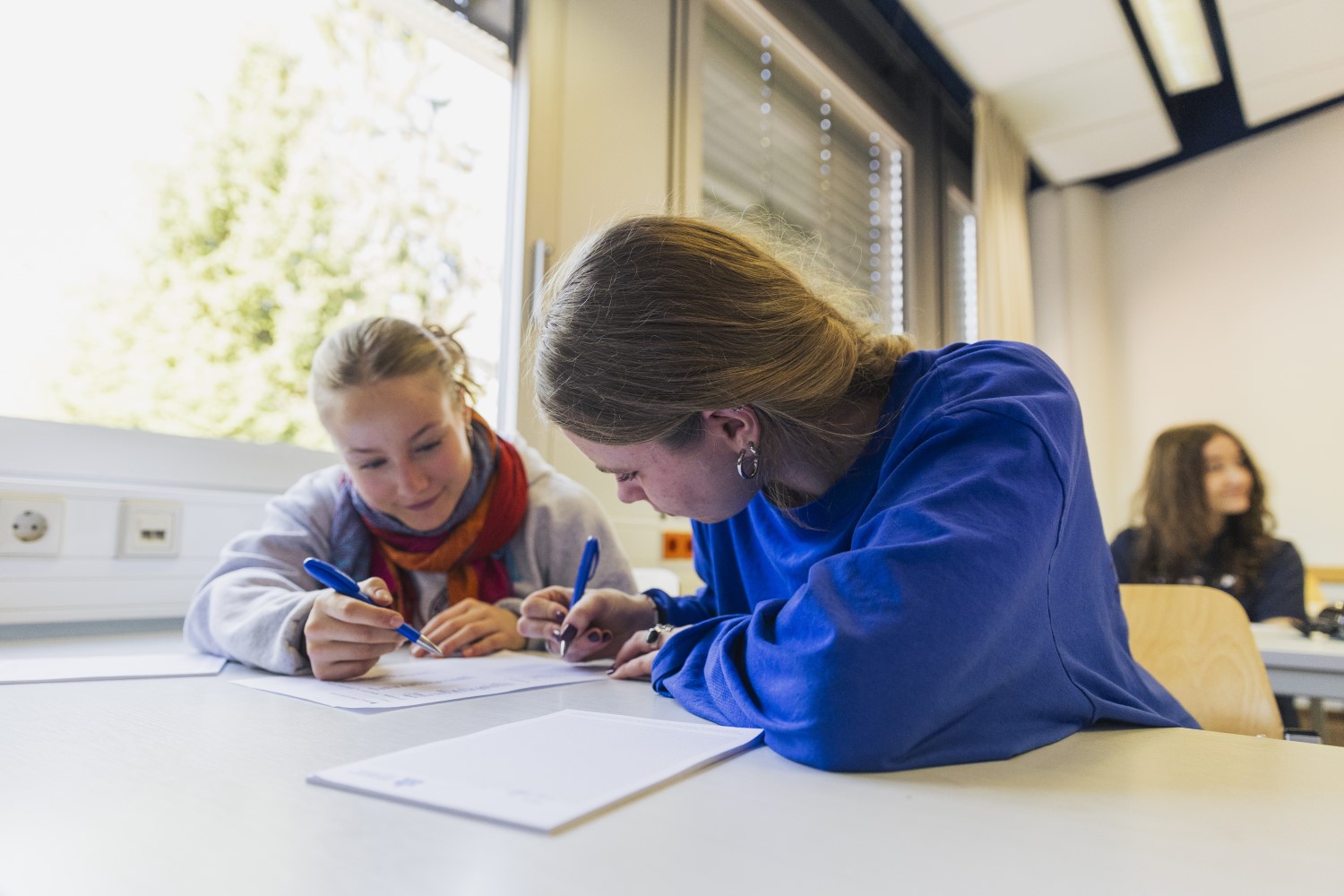
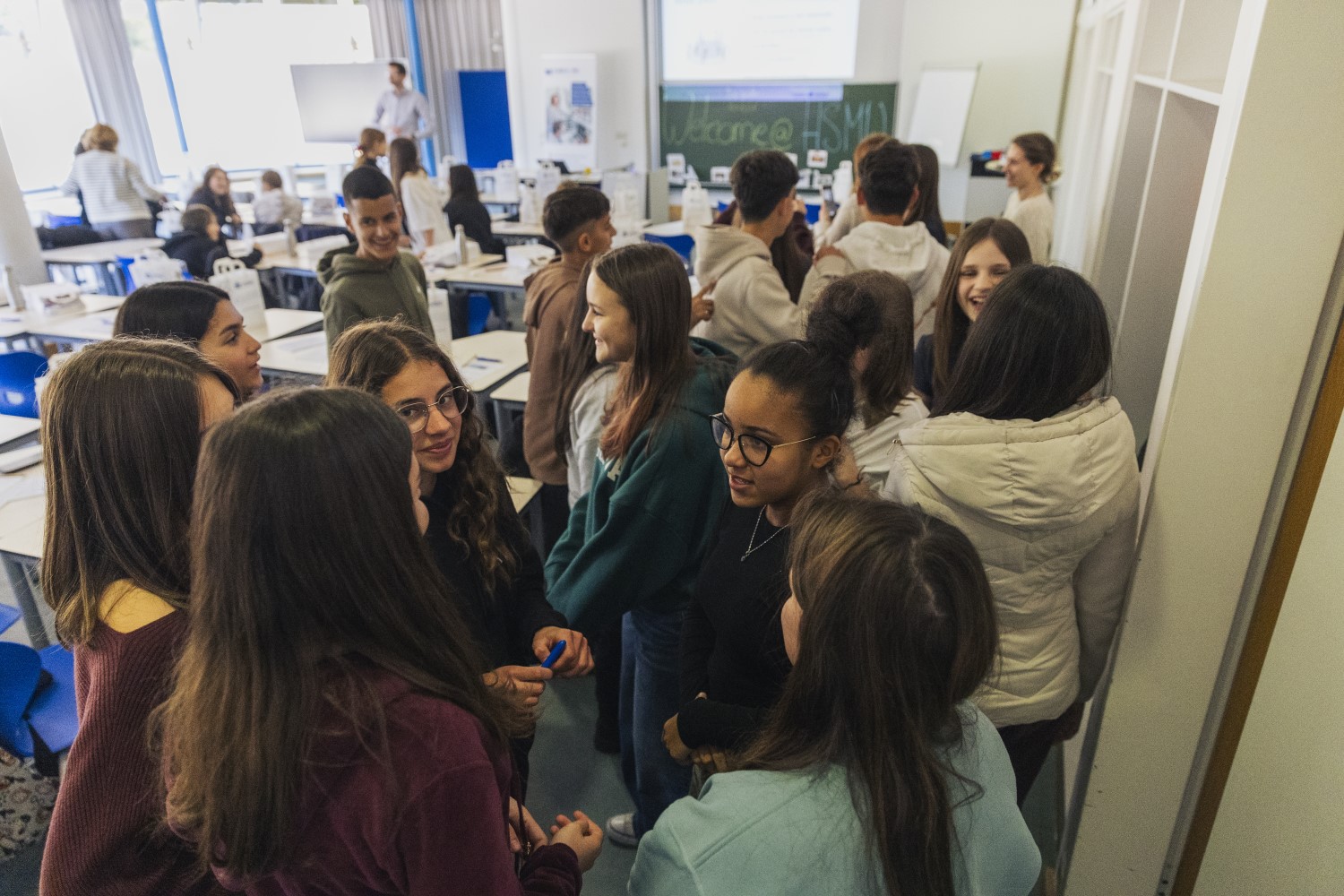
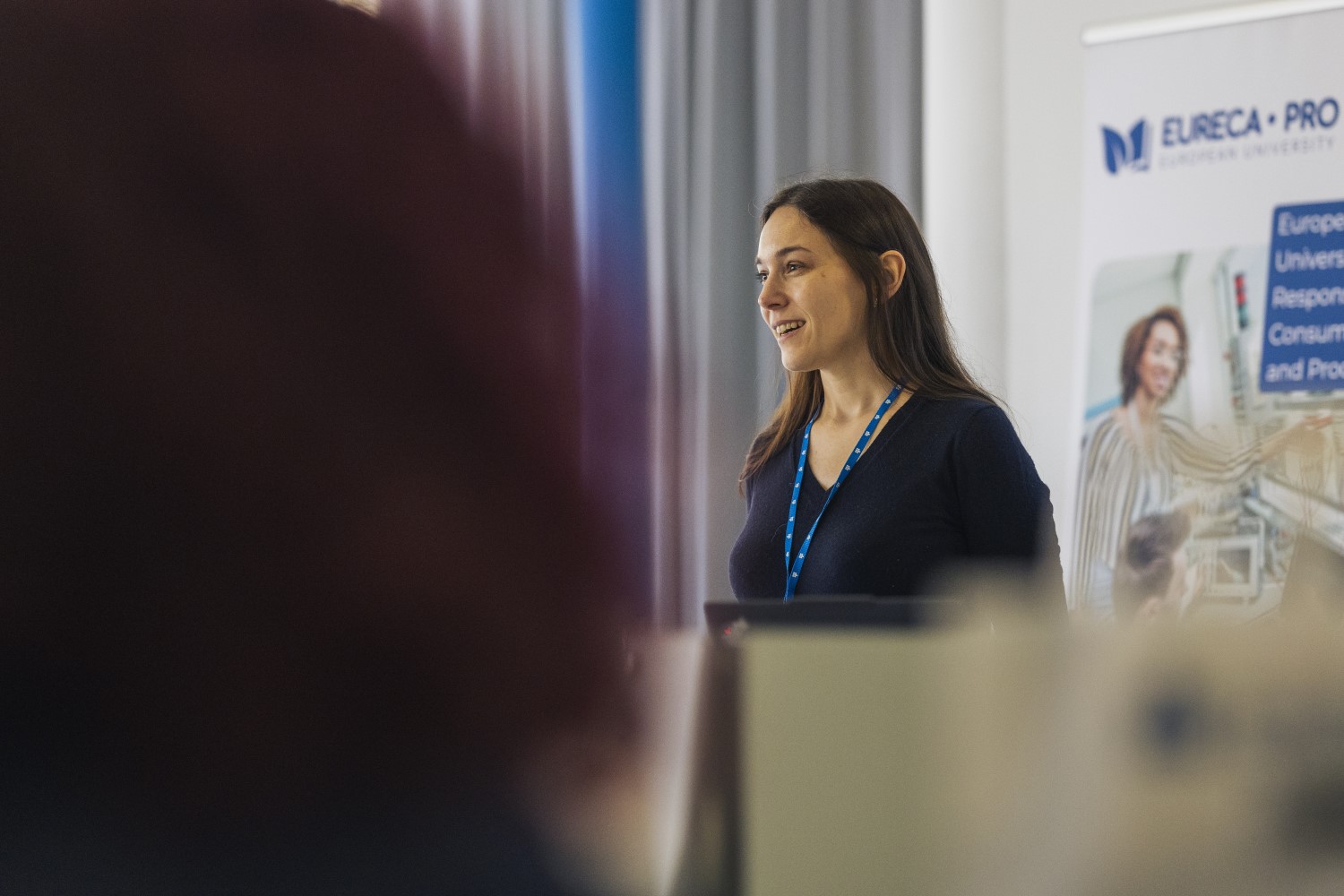
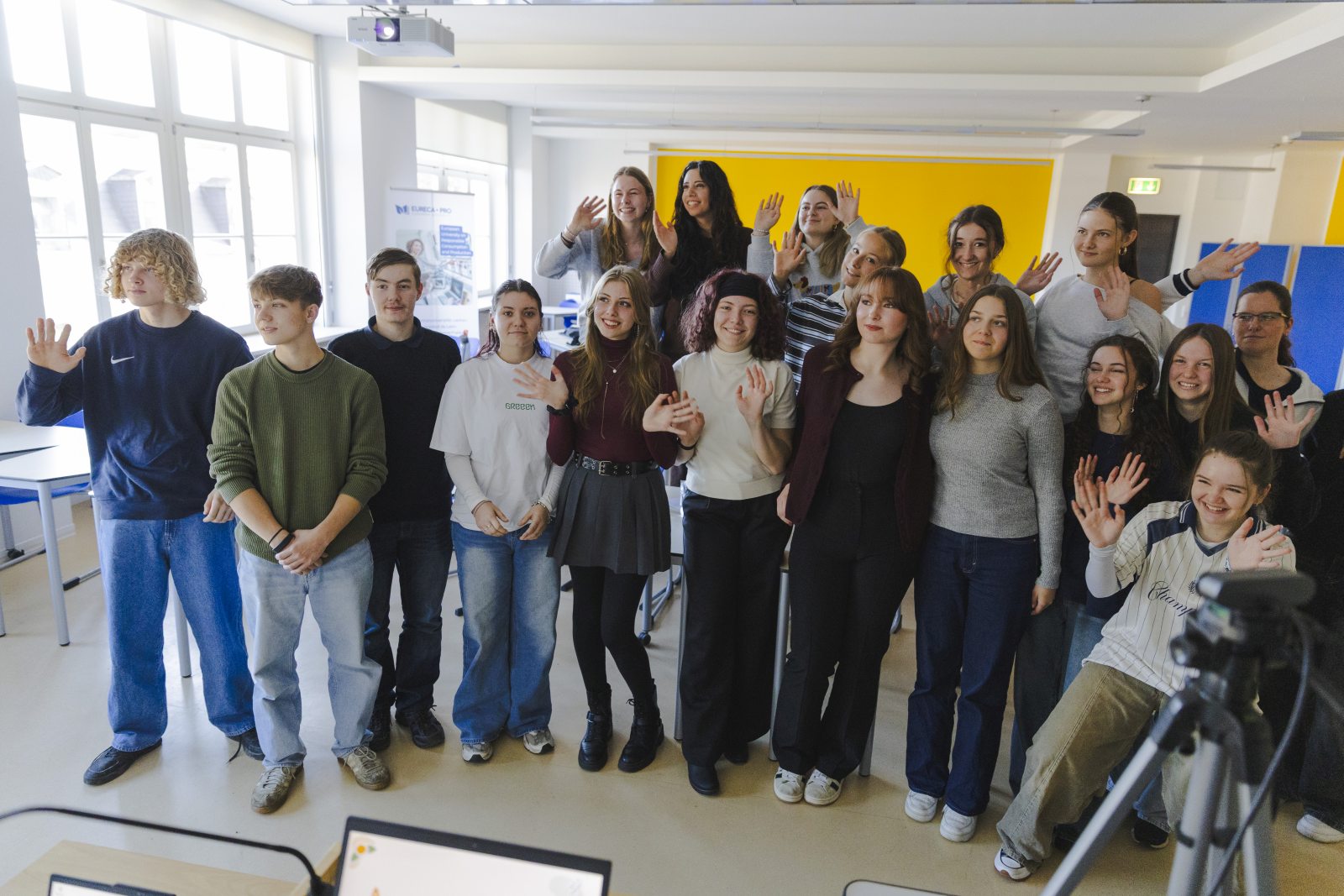
The European university alliance EURECA-PRO is bringing together 46 pupils from Poland, Greece and Germany on the campus of Mittweida University of Applied Sciences from 16th to 20th March. That’s where the 13- to 16-year-old “Young Eco Heroes” will present the results of their six-month project work on three topics related to sustainable consumption and production.
“The goal is the same for everyone: to find solutions that promote more sustainable behaviours in the communities they live in,” explains Prof. Dr. Volker Tolkmitt, Rector of Mittweida University of Applied Sciences. “Our university alliance EURECA-PRO aims to contribute to greater responsibility and sustainability in consumption and production through joint research and teaching throughout Europe. This starts with commitment at the local level – and with the commitment of Europe’s young generation. That’s why I’m delighted about this gathering here at Mittweida University of Applied Sciences.“
Since the beginning of the Young Eco Heroes project, the three school groups from the Martin Luther Gymnasium in Hartha, the 1st Junior High School in Chania and the Primary School No. 4 in Mikołów have been accompanied by their supervising teachers and researchers from the EURECA-PRO universities. They convey specialist background knowledge and provide insights into the world of academic work.
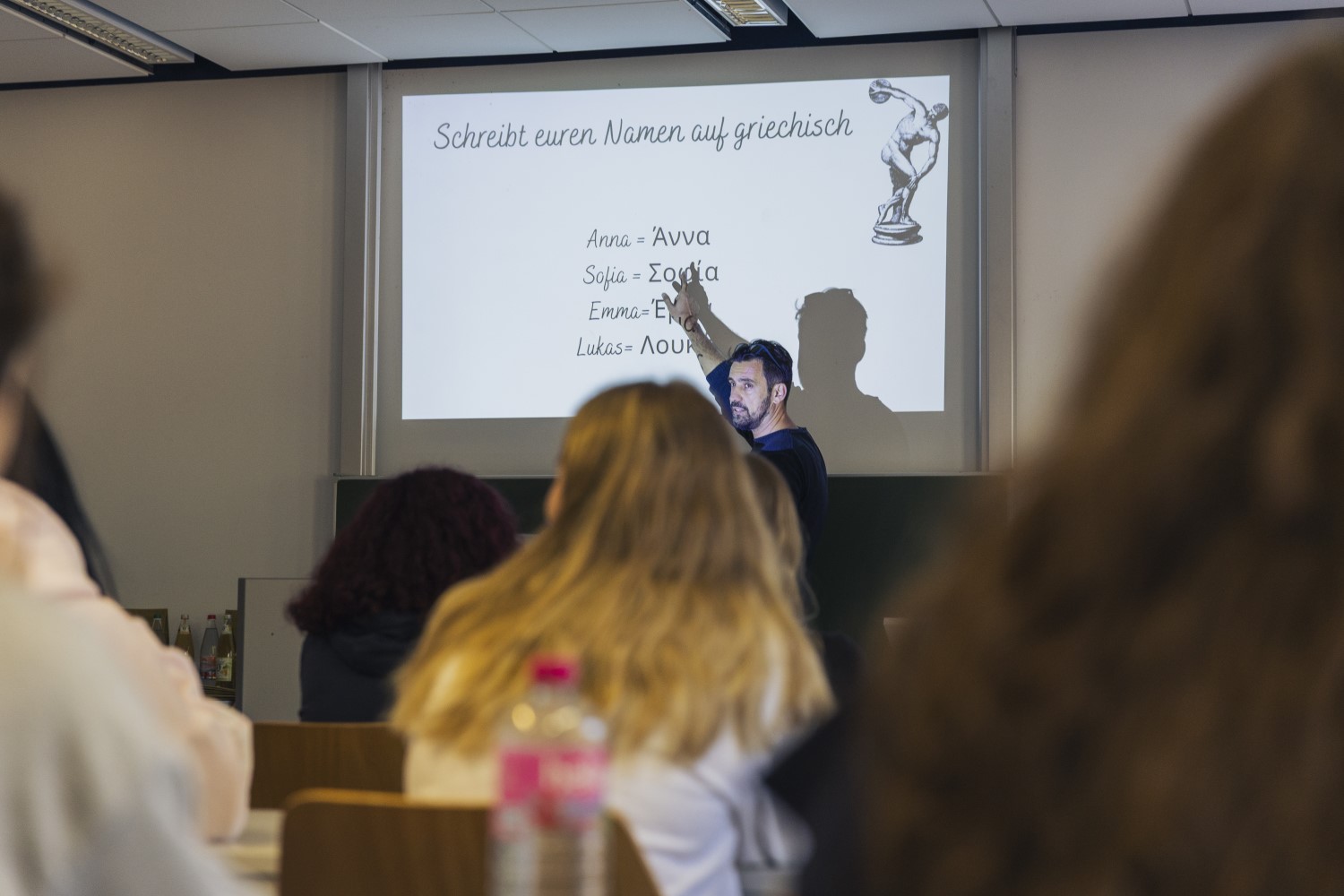
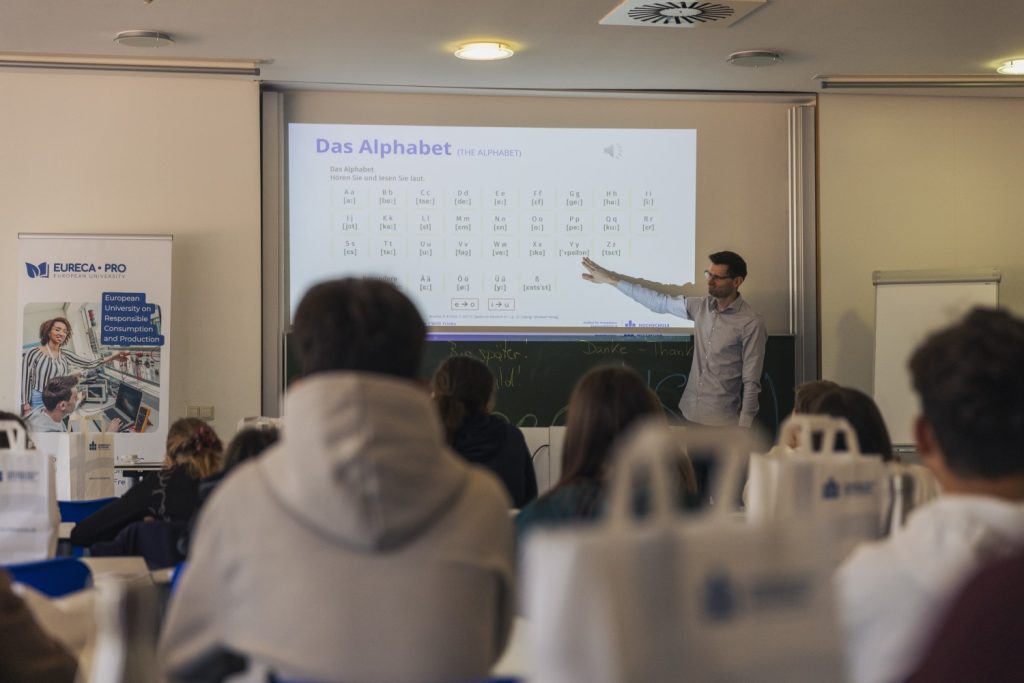
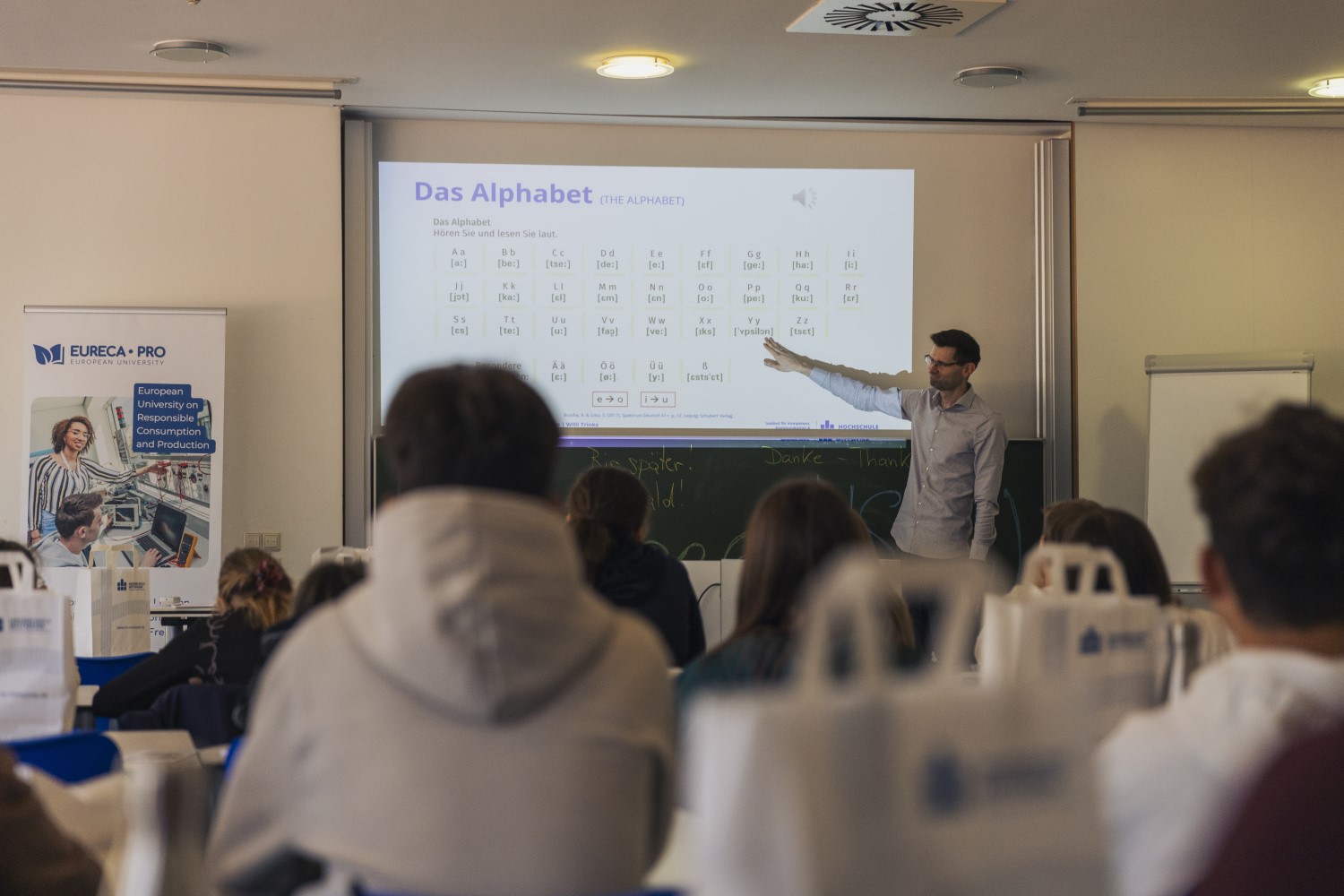
The pupils who participate in this project in their leisure time, acquire knowledge about the use of resources and their relevance. A second key aspect is the young people’s personal development, particularly in an international context: they develop an awareness of other cultures at an early age, learn to communicate in another language, and practice presenting their work in front of an audience.
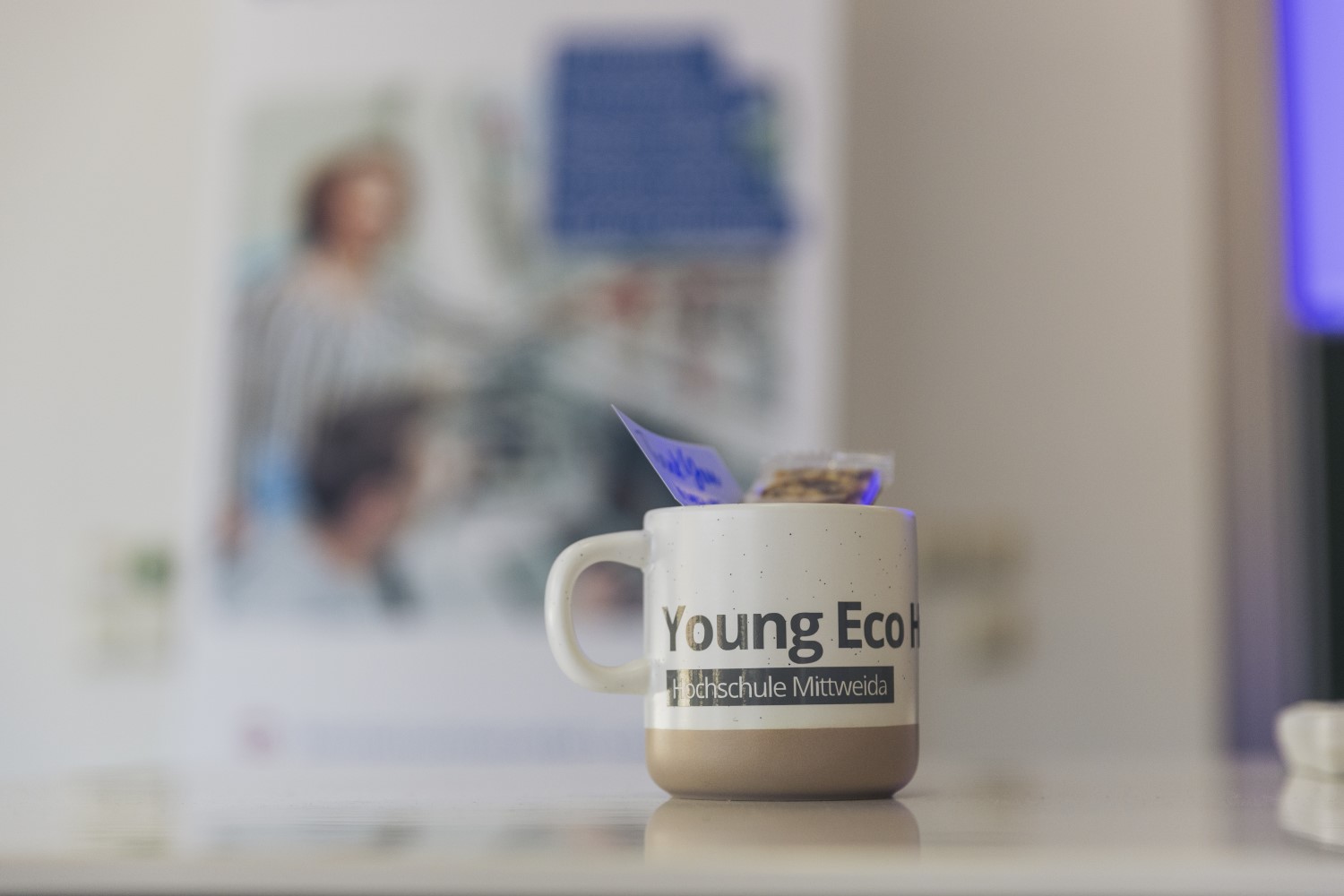
This European education project is carried out by EURECA-PRO – a young university alliance amongst whose nine members Mittweida University of Applied Sciences, Technical University of Crete and Silesian University of Technology are in charge of the Young Eco Heroes initiative.
With projects like this, the alliance wants to realise its vision of integrating society into science and education around the core topic of sustainable consumption and production.
About the Three Projects:
A taste of fair food
A core component of the European Green Deal is the so-called “Farm to Fork” strategy. The EU’s goal is to establish fair, healthy and environmentally friendly food systems. The pupils of the school in Hartha look at the entire food value chain from farm to plate.
Heike Delling, Research Assistant at Mittweida University of Applied Sciences: “Young people are consumers who can and should be given responsibility. That is a fundamental principle of our society in Germany: we have rights, and we also have responsibilities. The decisions we take as consumers have an impact on the world. And young people can learn this responsibility.”
When waste becomes art
Change of perspective: Instead of “Is this art or can it be thrown away?”, the project asks: “Does it have to be thrown away or can something new emerge from it?”. The school group of the city of Mikołów deals with the effects of excessive consumerism and the value of recycling. They learn how waste can have a second life through creativity and awareness of the environment.
Dr. Anna Wolny, Scientist at the Silesian University of Technology: “Building awareness around responsible waste management and reuse is essential – and when children learn through creativity and play, like turning waste into art, they do not just have fun. They build habits that shape a more sustainable future.”
Fast fashion, long-term waste?
Young people from Greece are researching the impact of fast fashion on the environment and society. How and where is clothing produced? What happens to textiles at the end of their life cycle? How do consumers’ choices affect our environment?
Assistant Professor Apostolos Giannis, Scientist at the Technical University of Crete: “The main challenge in managing textile waste lies in its composition. Textile waste is a complex mixture of different materials that are very difficult to separate and treat appropriately, especially because many of them are not biodegradable and require specific treatment methods. In many cases, people also do not sort their textile waste, and it ends up mixed with general waste.”
About EURECA-PRO
EURECA-PRO (European University on Responsible Consumption and Production) is a European university alliance founded in 2020. Its mission is to promote sustainability in higher education and research in line with the United Nations Sustainable Development Goal 12 “Ensure sustainable consumption and production patterns“. At the same time, the alliance brings together people from all over Europe. For example, joint study programmes are already being developed that enable students to seamlessly switch between two or more EURECA-PRO partner universities by means of an integrated semester abroad. In addition to Mittweida University of Applied Sciences, Technical University of Crete and Silesian University of Technology, the partners also include Technische Universität Bergakademie Freiberg, Université de Lorraine (France), Technical University of Leoben (Austria), Hasselt University (Belgium), Universidad de León (Spain) and Universitatea din Petroșani (Romania).