

A Taste of Fair Food
The driving force behind our second focus area of the EURECA-PRO Young Eco Heroes initiative is the Farm to Fork strategy of the European Commission. As one core element of the European Green Deal, the strategy aims to establish fair, healthy and environmentally friendly food systems. 18 pupils from Hartha in Germany are currently exploring local opportunities under this overarching goal.
We talked to Heike Delling, Research Associate and Freelance Lecturer at Mittweida University of Applied Sciences, who supports the pupils with her expert knowledge and to Mareike Gerhardt, supervising teacher at the Martin-Luther-Gymnasium in Hartha about the strategy, individual contributions and the involvement of young people in the creation of solutions.
Why is it important that young people engage with the topics of nutrition and the food value chain?
Heike: “Young people are consumers who can and should be given responsibility. That is a fundamental principle of our society in Germany: we have rights, and we also have responsibilities. Our division of labour in society, i.e., different areas in which we work, is highly specialized in Germany, but that does not relieve us of the responsibility to look for the origin of the products and services ourselves. The decisions we take as consumers have an impact on the world. And young people can learn this responsibility.”
Mareike: “Nutrition affects everyone. However, many people do not know where the food they eat comes from and what impact its production has. By exploring the Farm to Fork concept, oung people can learn to consume more consciously and take more responsibility for their own actions. At the same time, this strengthens their ability for judgement on issues such as climate change and food waste.”
Which change in our everyday behavior could bring about positive change in terms of Farm to Fork?
Heike: “Curiosity about the work and achievements of our fellow humans. Questioning what I consume or how I process it – wheather at home, in a restaurant, or elsewhere – out of genuine, personal interest. This is also important for those who produce and sell products or offer services. I ask a lot of questions in my professional life and often notice that some people are not used to answering questions about their own products.”
What is the biggest challenge of the Farm to Fork strategy?
Heike: “The short half-life of decisions. The pressure to slow down global trends and their implications is very high. The framework conditions are changing rapidly, which entails a high degree of uncertainty for everyone who takes responsibility, from politicians to companies to end consumers. Although the pace behind this fast-moving world is understandable, implementation is therefore a major challenge. As a result, some companies must fight harder to maintain their core business than they can participate in shaping our future.”
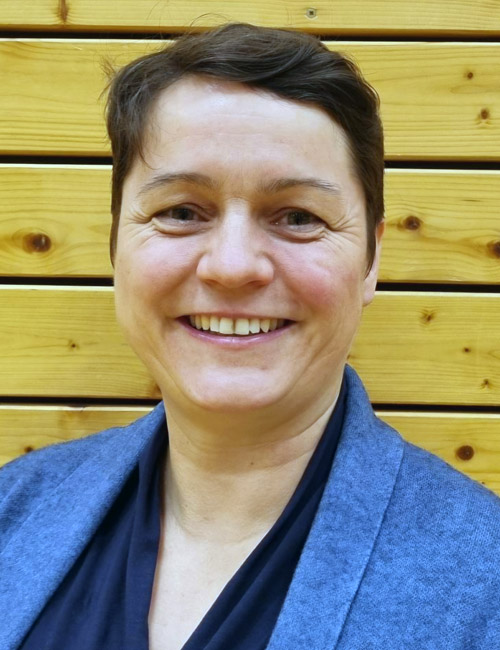
Heike Delling
Research Associate and Freelance Lecturer
Mittweida University of Applied Sciences
Considering this complexity of the topic, what do you expect from the school group in this project?
Mareike: “Above all, I expect curiosity, openness, and a willingness to engage critically with the topic. It is not about finding a perfect answer or result, but to understand contexts and develop their own points of view.”
Which progress has the group made so far, and what are you looking forward to in the remaining months?
Mareike: “As a kick-off, Mrs Heike Delling introduced the topic to the pupils and gave important insights. Afterwards, the pupils discussed on which aspects they would like to work on concretely. In the coming months, I look forward to supporting the pupils in implementing their ideas. We are also all looking forward to presenting our results in March and welcoming the peer groups from Poland and Greece to Germany.”
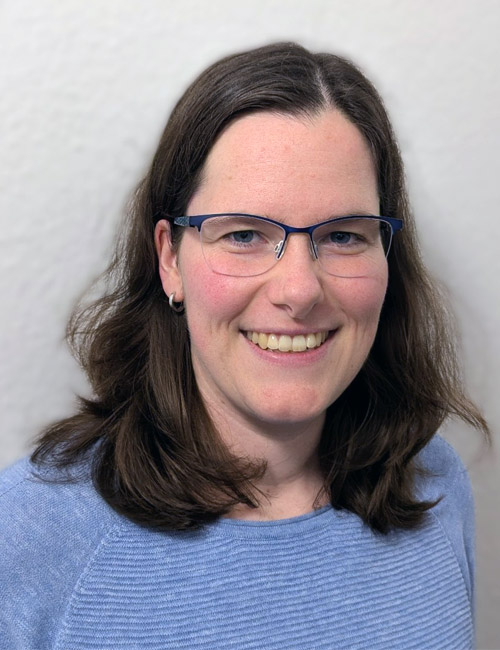
Mareike Gerhardt
Supervising Teacher
Martin-Luther-Gymnasium, Hartha
