

Navigating News & Media in the Digital Age
From January 2026, students at partner universities within the EURECA-PRO alliance will be able to enrol in a brand-new online module entitled Media & Information Literacy (MIL). Designed by members of the CREM team (Centre for Research on Mediations) at Université de Lorraine, this 20-hour international certificate offers a comprehensive introduction to the critical analysis of information and to understanding the role of the media in our societies.
Academic Perspective
Fully taught in English, flexible and open to undergraduate students from a wide range of disciplines, the module aims to strengthen critical thinking and digital skills — assets that have become essential in the age of disinformation.
Ahead of the launch of the MIL Module, we had the chance to sit down with Laurence Corroy, senior lecturer and researcher at CREM and project coordinator, to hear about the vision and inspiration behind creating this course:
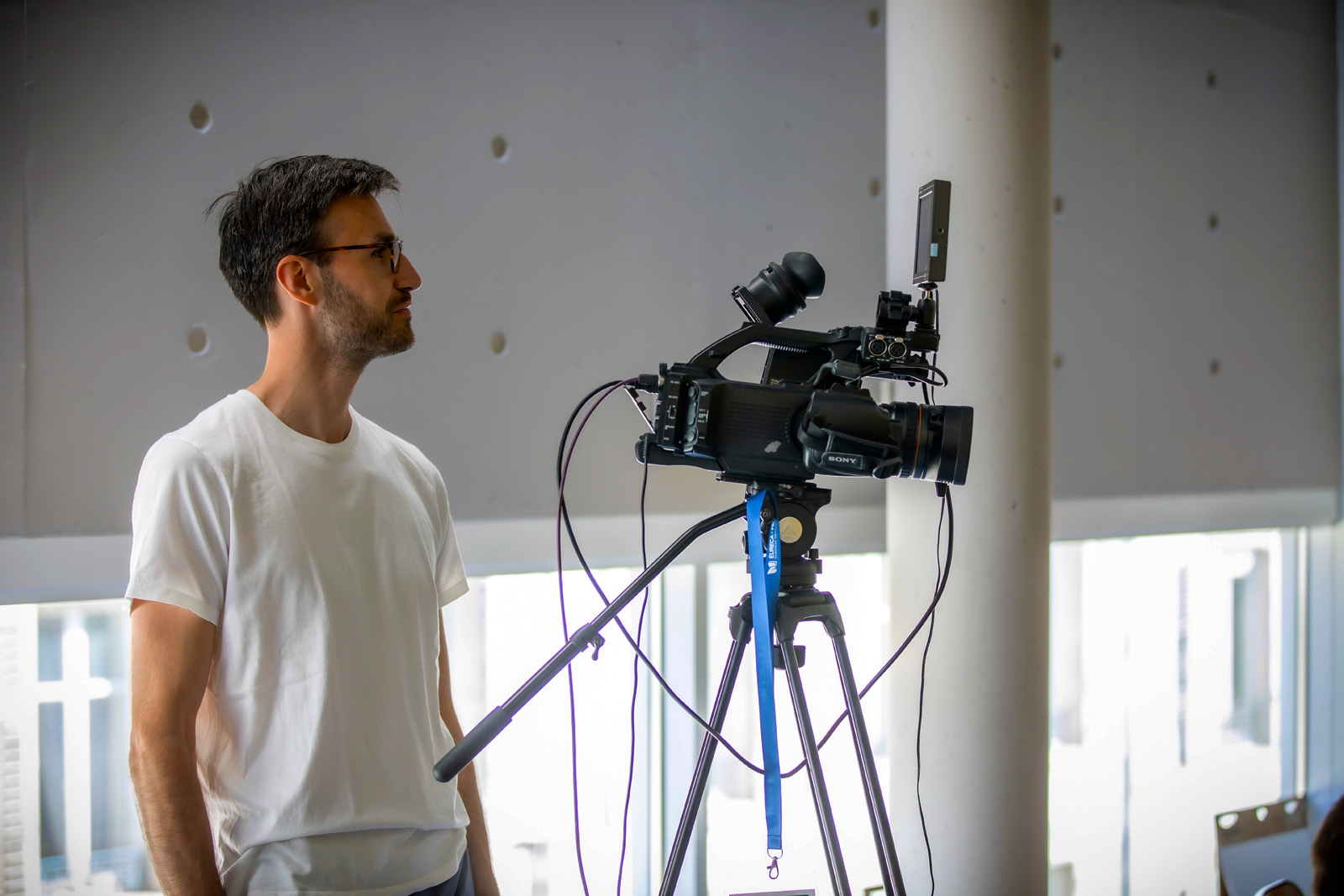
Why did you decide to create this new Media & Information Literacy module?
Laurence Corroy:
“In a context where information circulates extremely quickly and where the boundaries between facts, opinions and manipulative content are sometimes blurred, it has become essential to equip students with reliable analytical tools.
The MIL module responds to a clearly identified need: enabling everyone to navigate the media landscape in an autonomous, critical and responsible way.
Our aim is to make a genuine introduction to digital and media literacy accessible through a short and flexible format. We want students not only to be able to identify the risks of manipulation, but also to understand how the media shape our perceptions, our emotions and our social behaviours.”
Who is this certificate aimed at, and what will students learn?
Laurence Corroy:
“The module is open to all undergraduate students who are members of the EURECA-PRO alliance. It will be of particular interest to students in social sciences, communication, political science, health or life sciences but it was really designed as a transversal course, useful to everyone.
MIL is structured around six main modules and twenty-one key concepts. Topics include, for example:
- how information is constructed,
- fake news and information bubbles,
- stereotypes and media discrimination,
- journalistic ethics,
- the attention economy,
- as well as visual and digital literacy.
Each concept is presented through short videos or PDF resources, followed by quizzes that allow students to progressively validate their learning outcomes. The entire course is fully online, taught in English and completely asynchronous, as students can progress at their own pace.”
How does this module fit into the European dynamic of EURECA-PRO?
Laurence Corroy:
“EURECA-PRO brings together nine European universities around a shared project: training citizens and professionals capable of acting within a sustainable, critical and responsible European space. The MIL module is fully aligned with this ambition.
It was designed by a team of media specialists and is based on case studies drawn from several European countries. Students are therefore exposed to different media systems, regulatory frameworks and ways of approaching information.
MIL is also a simple way to internationalise one’s academic pathway. It represents a first step towards a European study experience, even for those who are unable to take part in a physical mobility.”
Access & Registration
A short and accessible module available from January 2026
Launched for the first time in January 2026, Media & Information Literacy will be accessible via the EURECA-PRO LMS platform. Interested students can obtain further information and register through their programme director or international relations officer.
Through this certificate, CREM and EURECA-PRO pursue a shared objective: training digital citizens capable of questioning, analysing and understanding the role of the media in our societies — and thus contributing to a more informed European public sphere.
